Mixed Berry Smoothie with Protein Powder
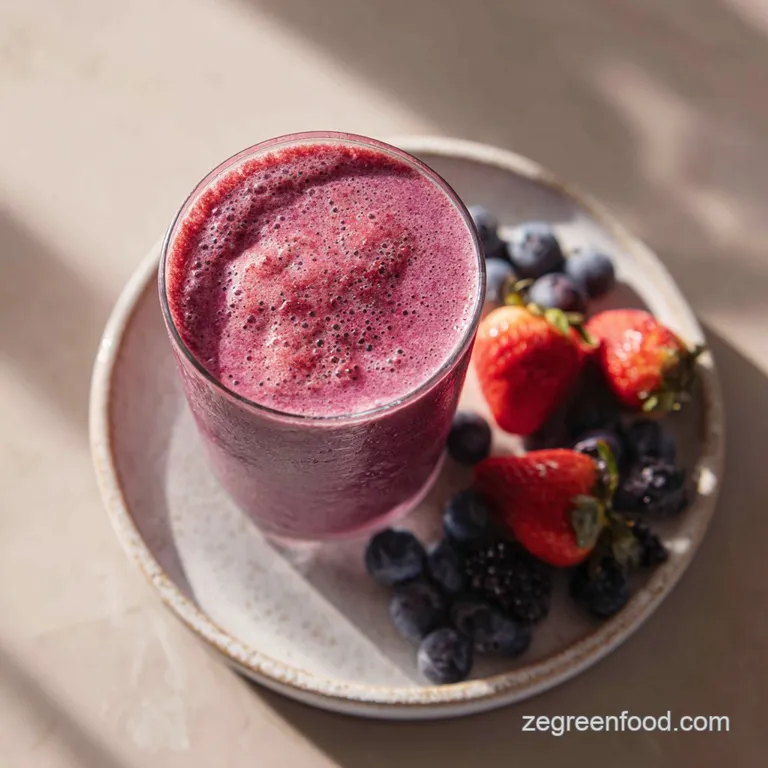
- Time: Active 5 minutes, Passive 0 minutes, Total 5 minutes
- Flavor/Texture Hook: Frost kissed and velvety
- Perfect for: Post workout recovery or cellular optimization
- Performance Specs: Analyzing the Macronutrient Efficiency
- Component Analysis: Selecting Bioavailable Nutrients for Growth
- Functional Components: Selecting Bioavailable Nutrients for Growth
- Mechanical Requirements: Optimizing Blade Friction and Vortices
- Protocol for Assembly: Achieving Peak Structural Integrity
- Troubleshooting Texture: Correcting Viscosity and Solubility Issues
- Volume Adjustments: Scaling the Formula Without Loss
- Debunking Nutritional Fallacies Surrounding Protein and Berries
- Thermal Stability: Managing Preservation and Cellular Integrity
- Visual Optimization: Enhancing the Aesthetic of Raw Nutrition
- Recipe FAQs
- 📝 Recipe Card
Performance Specs: Analyzing the Macronutrient Efficiency
- High Speed Emulsification: The almond butter and Greek yogurt act as surfactants, binding the water based milk to the protein solids for a silkier mouthfeel.
- Thermal Viscosity Control: Frozen banana slices release pectin as they break down, which functions as a natural thickener that stays stable even as the smoothie begins to warm.
- Hydrophilic Integration: Chia seeds absorb up to 12 times their weight in liquid, creating a mucilaginous gel that prevents the "bleeding" or separation of juice from the protein foam.
- Protein Solubility: Adding the liquid phase before the powder ensures the whey protein hydrates fully rather than sticking to the dry blender walls.
| Method | Total Time | Resulting Texture | Best For |
|---|---|---|---|
| High Speed Pulse | 5 minutes | Aerated and light | Immediate consumption |
| Low Speed Grind | 8 minutes | Denser and ultra thick | Smoothie bowls |
| Pre Soak Method | 15 minutes | Maximum hydration | Optimal digestion |
The difference between a "fast" blend and a "classic" approach often comes down to the temperature of your equipment. For the most vibrant results, I’ve found that even 5 minutes of pre chilling the blender jar can prevent the motor's heat from dulling the berries' bright acidity.
Component Analysis: Selecting Bioavailable Nutrients for Growth
| Ingredient | Science Role | Pro Secret |
|---|---|---|
| Mixed Berries | Anthocyanin source | Use a mix with blackberries for structural seeds |
| Whey Protein | Bioavailable amino acids | Vanilla masks the earthy notes of the seeds |
| Almond Butter | Lipid emulsifier | Ensure it is "drippy" for faster integration |
| Chia Seeds | Fiber and Omega-3s | Grind them first if you dislike the texture |
Functional Components: Selecting Bioavailable Nutrients for Growth
To achieve the intended nutritional profile and texture, we use these specific ratios.
- 1.5 cups (150g) frozen mixed berries: These provide the bulk of the phytochemicals. Why this? Frozen berries have higher antioxidant stability than week old fresh ones.
- 0.5 (50g) frozen banana, sliced: The primary source of pectin and potassium. Why this? Frozen bananas create a creamy, ice cream like base without dairy fat.
- 1 scoop (30g) vanilla whey protein: Our primary nitrogen source for muscle repair.
- 1 cup (240ml) unsweetened almond milk: The low calorie hydration base.
- 0.5 cup (125g) plain Greek yogurt: Provides probiotics and additional casein heavy protein.
- 1 tbsp (15g) almond butter: The healthy fat required for absorbing fat soluble vitamins.
- 1 tsp (5g) chia seeds: Essential for glycemic control and fiber.
- 0.5 tsp vanilla extract: A volatile aromatic that enhances the perception of sweetness.
| Original Ingredient | Substitute | Why It Works |
|---|---|---|
| Whey Protein | Pea Protein | Plant based; Note: Requires 20% more liquid as it absorbs more moisture. |
| Greek Yogurt | Silken Tofu | Similar protein density with a more neutral flavor profile. |
| Almond Milk | Soy Milk | Increases total protein by 7-8g per serving. |
| Almond Butter | Sunflower Butter | Nut free alternative with a similar lipid to protein ratio. |
If you are looking for a slightly different flavor profile while maintaining a similar density, you might enjoy the creamy texture of my Creamy Avocado Banana recipe. It uses similar emulsification principles but with a different healthy fat source.
Mechanical Requirements: Optimizing Blade Friction and Vortices
You don't need a lab grade centrifuge, but the hardware matters. A high speed blender (like a Vitamix or Ninja) is preferable because it can shatter berry seeds and chia skins, resulting in a completely smooth liquid.
If you’re using a lower wattage personal blender, you'll need to be more strategic about the order of operations to avoid air pockets.
The key is the "vortex." When the liquid spins fast enough, it pulls the solids down into the blades. If your mixture is too thick, the blades will just spin in an air pocket a phenomenon known as cavitation.
To prevent this, always start on the lowest setting to get the ingredients moving before cranking it to high.
Protocol for Assembly: Achieving Peak Structural Integrity
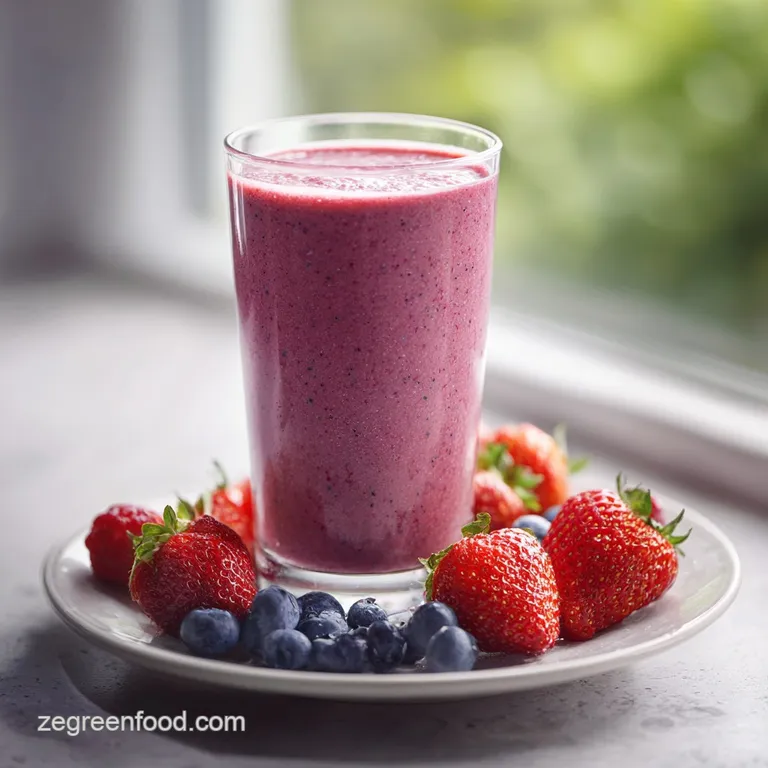
- Pour the almond milk.Note: Liquid at the bottom prevents the protein powder from clumping at the base.
- Add the Greek yogurt. Placing the heavy, wet ingredients next ensures the blades have something to grab immediately.
- Spoon in the almond butter. Dropping this directly into the liquid prevents it from sticking to the dry sides of the jar.
- Add the vanilla whey protein powder. By placing it in the center of the liquid, it hydrates instantly when the motor starts.
- Sprinkle in the chia seeds and vanilla extract. These smaller components need to be submerged to avoid floating on top.
- Layer the frozen banana slices. These act as weights to push the lighter ingredients down.
- Top with the frozen mixed berries.Bury the other ingredients to create downward pressure.
- Pulse five times. This breaks the large frozen chunks into manageable sizes before the continuous blend.
- Blend on medium high for 45 seconds. Watch for a deep purple hue and a glossy surface.
- Increase to high for 15 seconds.Wait until the sound changes from a grinding noise to a smooth, consistent hum.
Chef Tip: If you want to take the texture to a professional level, freeze your almond milk into ice cube trays. Using "milk cubes" instead of liquid milk creates a thicker, frostier consistency that mimics a milkshake without the sugar.
Troubleshooting Texture: Correcting Viscosity and Solubility Issues
Why Your Smoothie Feels Gritty
Usually, this is a result of undissolved protein powder or large berry seeds. Whey protein is particularly prone to clumping if it hits frozen fruit before it hits the liquid. If your blender isn't breaking down the seeds, try blending the berries and liquid first, then adding the other ingredients.
How to Fix a Thin Consistency
If your drink feels more like juice than a meal, the ratio of frozen solids to liquid is off. This often happens if the fruit has partially thawed. You can't just add ice, as that dilutes the flavor profile. Instead, add more frozen banana or a tablespoon of oats to provide structural integrity.
| Problem | Root Cause | Solution |
|---|---|---|
| Foamy Texture | Excessive air incorporation | Blend on the lowest speed for 10 seconds at the end to "de gas." |
| Muted Flavor | Temperature is too low | Add a pinch of sea salt to enhance the berries' natural sugars. |
| Blender Stall | Cavitation/Air bubble | Stop the motor, stir with a spatula, and add 2 tbsp of liquid. |
Common Mistakes to Avoid:
- ✓ Never add the protein powder first; it will stick to the bottom and never fully integrate.
- ✓ Don't use room temperature fruit if you want a velvety mouthfeel.
- ✓ Avoid using "light" yogurts with stabilizers; the gums can make the texture slimy.
- ✓ Ensure the blender lid is fully sealed before increasing speed to avoid air leaks.
- ✓ Don't over blend beyond 60 seconds or the friction will melt the ice crystals.
If you're dealing with a surplus of greens and want to pivot to a more cleansing profile, the techniques used in my Detox Green Smoothie recipe can help you manage those leafy textures without the grit.
Volume Adjustments: Scaling the Formula Without Loss
When doubling this recipe for a partner or meal prep, don't just multiply everything by two. For a 2x Scale, you should keep the liquid at 1.75 cups rather than a full 2 cups. The extra volume of frozen fruit will create more liquid as it breaks down, and over diluting can ruin the suspension.
For a 0.5x Scale, use the same blending time. Even though there is less mass, the blades still need the same amount of time to pulverize the seeds. Be careful with the almond butter at this scale use a scant tablespoon, or it may dominate the flavor of the fewer berries.
Debunking Nutritional Fallacies Surrounding Protein and Berries
A common misconception is that blending berries "destroys" the fiber. In reality, the blender simply performs the mechanical breakdown your teeth would normally do. The insoluble fiber remains present; it’s just in smaller pieces, which can actually make the nutrients more accessible.
Another myth is that you must drink a protein shake within 20 minutes of a workout. While nutrient timing has some merit for elite athletes, for most of us, the total daily intake is what matters.
A mixed berry smoothie with protein powder consumed an hour later still provides the same amino acids and antioxidants for recovery.
Thermal Stability: Managing Preservation and Cellular Integrity
Storage: You can store this in the fridge for up to 24 hours in an airtight glass jar. Expect some separation; the chia seeds will continue to thicken the mixture. Simply give it a vigorous shake before consuming.
Freezing: This recipe freezes beautifully as "smoothie pops." Pour the mixture into silicone molds for a high protein frozen treat. I don't recommend freezing the liquid smoothie in a jar to thaw later, as the protein can become grainy once defrosted.
Zero Waste: Don't toss those slightly bruised berries or the "ugly" overripe bananas. Peel and freeze them immediately. They are actually better for smoothies than fresh fruit because their sugar content is higher and their cell walls are already weakened, leading to a smoother blend.
Visual Optimization: Enhancing the Aesthetic of Raw Nutrition
A vibrant purple smoothie deserves a presentation that matches its nutritional density. I always serve this in a chilled glass to maintain the internal temperature. If you’re feeling fancy, save a few chia seeds or a single raspberry to place on top.
For those who enjoy a classic fruit pairing, the logic used in my Strawberry Banana Smoothie recipe can be applied here try layering the berry blend over a simple banana almond milk base for a stunning ombre effect. The contrasting colors aren't just for show; they signify a diverse range of polyphenols that are essential for optimizing your health.
Recipe FAQs
Can you put protein powder in a berry smoothie?
Yes, absolutely. Protein powder is an excellent addition to berry smoothies as it increases satiety and aids muscle recovery. Ensure you blend the liquid before the powder to achieve high speed emulsification and prevent dry clumps.
Can you mix protein powder into a smoothie without a blender?
No, blending is required for best results. Shaking or stirring alone will result in pockets of undissolved protein powder adhering to the container walls. A high speed blender is necessary to shatter the powder's particles into the liquid base effectively.
What should you not mix with protein powder in a smoothie?
Do not add the powder directly onto frozen fruit or ice. This causes immediate clumping because the powder hits the least hydrated surface first. Always layer the liquid and yogurt first, followed by the powder, before adding the frozen components.
What are common berry smoothie mistakes that result in a thin texture?
Using too much liquid or slightly thawed fruit is the primary error. Frozen fruit provides the necessary pectin and thermal viscosity for a thick base. To correct a thin result, incorporate more frozen banana or a tablespoon of oats for structure, similar to the stabilizing techniques used in our Mediterranean Chickpea Salad recipe.
Is it true that blending berries destroys their nutritional benefits?
No, this is a common misconception. Blending performs the mechanical breakdown that digestion would otherwise require, effectively making nutrients more bioavailable. The fiber remains intact, just in smaller, more easily digestible pieces.
How do I ensure the protein powder integrates smoothly without being grainy?
Layer the ingredients correctly and blend immediately. Start with liquid, then yogurt, then powder, then frozen items. This layering prevents cavitation and ensures the whey dissolves fully into the water base, which is the secret to achieving that velvety mouthfeel you want in a One Pot Vegan recipe.
What is the best way to sweeten a berry protein smoothie without added sugar?
Rely on naturally sweet frozen ingredients like banana or mango. If further sweetness is needed, add a small amount of vanilla extract, which tricks the palate into perceiving higher sweetness. Do not rely on sugar, as it interferes with the glycemic control provided by the fiber.
Mixed Berry Protein Smoothie
Ingredients:
Instructions:
Nutrition Facts:
| Calories | 468 kcal |
|---|---|
| Protein | 43 g |
| Fat | 15 g |
| Carbs | 42 g |
| Fiber | 9 g |
| Sugar | 22 g |
| Sodium | 261 mg |
