Hearty Black Eyed Pea Soup

- Prep15 Mins
- Cook1 Hrs 30 Mins
- Servings8
- Time: 15 min active + 1 h 30 min cooking + 12 h resting
- Flavor & Texture: Smoky, earthy, and hearty
- Perfect for: Meal prep or cold weather dinners
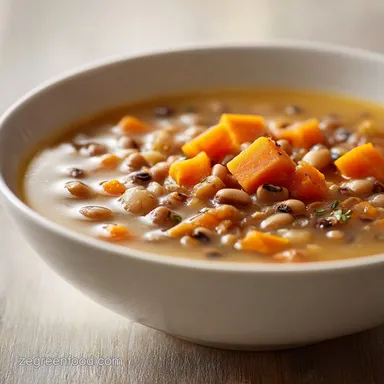
Hearty Black Eyed Pea Soup
Often associated with the Southern United States, this dish is a New Year's Day tradition intended to bring luck and prosperity for the year ahead. It is a comforting staple that highlights a history of using available ingredients to their fullest.
The resulting bowl is rich and satisfying, but remains light enough for a standard weekday meal. This plant-based version of the classic keeps the deep, savory characteristics typically found in traditional diner versions.
The depth of flavor comes from a gradual build. By layering the vegetables and spices before adding the liquid, you create a complexity that makes the broth taste as though it has been simmering for an entire day.
The Building Blocks
The quality of your legumes makes a big difference here. Rinsing them well removes excess starch, which prevents the broth from becoming too gummy.
For the Aromatic Base
- 2 tbsp olive oil
- 1 medium onion, diced
- 2 medium carrots, diced
- 2 stalks celery, diced
- 4 cloves garlic, minced
For the Hearty Body
- 1 lb dried black eyed peas, rinsed and soaked overnight Why this? Soaking ensures even cooking and better digestion
- 8 cups smoked vegetable stock Why this? Provides the essential woody flavor without meat
- 1 tsp dried thyme
- 1 tsp smoked paprika
- 2 bay leaves
- 1 tsp salt
- 1/2 tsp black pepper
For the Fresh Finish
- 3 cups chopped collard greens
- 1 tbsp lemon juice Why this? Brightens the heavy earthy notes at the end
| Ingredient | Role | If You Don't Have It |
|---|---|---|
| Dried Black Eyed Peas | Primary protein and structure | Brown lentils (cook faster, change texture) |
| Smoked Veg Stock | Flavor base | Regular veg stock + 1 tsp liquid smoke (approximate) |
| Collard Greens | Bitter contrast | Kale or Swiss chard |
Essential Gear
A heavy-bottomed pot is the best tool for this job. It distributes heat evenly, which prevents the peas from scorching on the bottom during the long simmer.
- Large Dutch oven or stockpot
- Fine-mesh strainer (for rinsing peas)
- Sharp chef's knife and cutting board
- Wooden spoon or heat-resistant spatula
Bringing It Together
Phase 1: Developing the Flavor Base
- Heat 2 tbsp olive oil in a Dutch oven over medium heat.
- Add the diced onion, carrots, and celery. Sauté for 8 to 10 minutes, stirring occasionally, until onions are translucent and carrots have softened.

- Stir in the minced garlic, 1 tsp dried thyme, and 1 tsp smoked paprika. Cook for 60 seconds until the spices are fragrant. Note: Don't let the garlic brown or it will turn bitter.
Phase 2: The Slow Simmer
- Pour in the soaked black eyed peas and 8 cups smoked vegetable stock.

- Add 2 bay leaves, 1 tsp salt, and 1/2 tsp black pepper.
- Increase heat to bring the liquid to a gentle boil, then immediately reduce heat to low.
- Cover with a lid slightly ajar and simmer for 60 to 90 minutes until the peas are tender but not falling apart.
Phase 3: The Final Touch
- Stir in 3 cups chopped collard greens and simmer for 5 to 7 minutes until wilted.

- Remove the bay leaves.
- Stir in 1 tbsp lemon juice right before serving.
What Can Go Wrong
When working with dried legumes, the biggest hurdle is usually the texture. If you add salt or acid too early in the process, it can sometimes toughen the skins.
To Fix Hard Beans
If the peas are still firm after 90 minutes, they might just need more time. Give them another 20 minutes. If the liquid has dropped too low, add 1 cup of warm water to keep them submerged.
For a Creamier Texture
If you prefer a thicker consistency, take a potato masher or a fork and crush a small portion of the peas directly in the pot. Stir them back in to naturally thicken the broth.
When the Greens are Tough
Collard greens are heartier than spinach. If they feel too fibrous, simmer them for an extra 5 minutes before adding the lemon juice.
| Problem | Root Cause | Solution |
|---|---|---|
| Peas remain hard | Old beans or early salting | Simmer longer; add warm water if needed |
| Soup is too thin | Not enough simmer time | Mash some beans or simmer uncovered |
| Bitter taste | Burnt garlic | Balance with an extra squeeze of lemon |
Creative Twists
You can easily shift the profile of your black eyed pea soup depending on what you have in the pantry. For a more pungent kick, I like adding a pinch of cayenne pepper or a dash of hot sauce.
If you want a more contemporary twist, try adding diced sweet potatoes along with the carrots. They add a natural sweetness that balances the smokiness of the stock. For those who prefer a different kind of hearty meal, you might enjoy a vegetable quinoa soup for a similar nutrient profile.
| Original Ingredient | Substitute | Why It Works |
|---|---|---|
| Collard Greens | Kale | Similar heartiness. Note: Remove tough stems first |
| Smoked Veg Stock | Regular Veg Stock + Smoked Paprika | Mimics the smoke. Note: Less depth than smoked stock |
| Lemon Juice | Apple Cider Vinegar | Provides the needed acid. Note: Adds a fruitier tang |
Storage and Reheating
This black eyed pea soup is even more delicious the following day, as the legumes soak up the smoky broth and the flavors meld together.
In the Fridge
Keep in a sealed container for up to 4 days.
In the Freezer
This soup is freezer-friendly. Ensure it is completely cooled before placing it in freezer-safe containers or bags. It will keep for up to 3 months.
For the Best Reheat
Defrost overnight in the refrigerator. Warm it in a pot over medium-low heat until it reaches 165°F/74°C in the centre. Since the beans absorb liquid while stored, stir in a splash of vegetable stock or water to reach your desired consistency.
Serving Suggestions

A simple bowl is wonderful, but adding a few toppings makes it feel like a full meal. I suggest a scoop of vegan sour cream or a sprinkle of fresh parsley.
Pair your soup with a slice of toasted sourdough or a warm corn muffin; the lemon juice provides a brightness that balances the heartiness of the bread. For even more contrast, a side of quick-pickled onions adds a zesty, crunchy element that works beautifully.
The Technique Behind It
The success of this recipe comes down to how the heat is managed.
Sauté Foundation: Cooking the carrots and onions slowly creates a base of natural sugars. This replaces the need for heavy additives by building a complex flavor profile from the start.
Controlled Simmer: Keeping the lid slightly ajar allows a small amount of steam to escape. This concentrates the broth while ensuring the peas cook through without boiling over.
Before You Start Cooking
Can I skip soaking the peas and still get them soft?
Soaking is recommended so the peas cook more evenly. Unsoaked peas can still soften, but they will need a longer simmer.
How do I loosen the soup if it gets too thick?
Stir in more smoked vegetable stock until you reach your desired consistency. This adjusts the thickness without altering the flavor profile.
What can I use instead of collard greens?
Try using chopped kale or Swiss chard instead. These alternatives provide a similar earthy flavor and texture.
Where should I store the leftovers?
Keep the soup in the refrigerator. The legumes absorb more smoky broth over time, meaning it tastes even better the next day.
Is it possible to use a slow cooker?
Yes, you can adapt this for a slow cooker by simmering the ingredients on low for several hours. This method is a great alternative for those who prefer a hands-off approach.
Slow-Cooked Black Eyed Pea Soup
Ingredients:
Instructions:
Try These Next

Green Pepper Soup with Ground Beef
Weeknight cooks will love this Green Pepper Soup. It features browning beef for deep flavor and…

Vegetable Quinoa Soup: One-Pot
Warm up with this Vegetable Quinoa Soup. This healthy vegetable quinoa soup recipe includes a…

Quick Mediterranean Quinoa Salad
This Quick Mediterranean Quinoa Salad is refreshing. This Mediterranean quinoa salad recipe has a…
