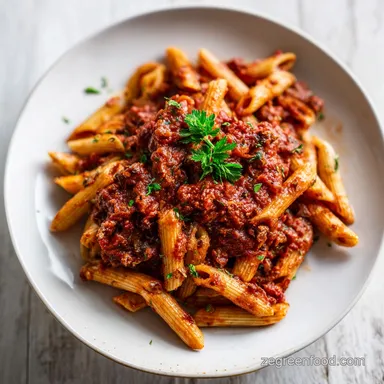
Lazy Pasta: Velvety One-Pot Dinner
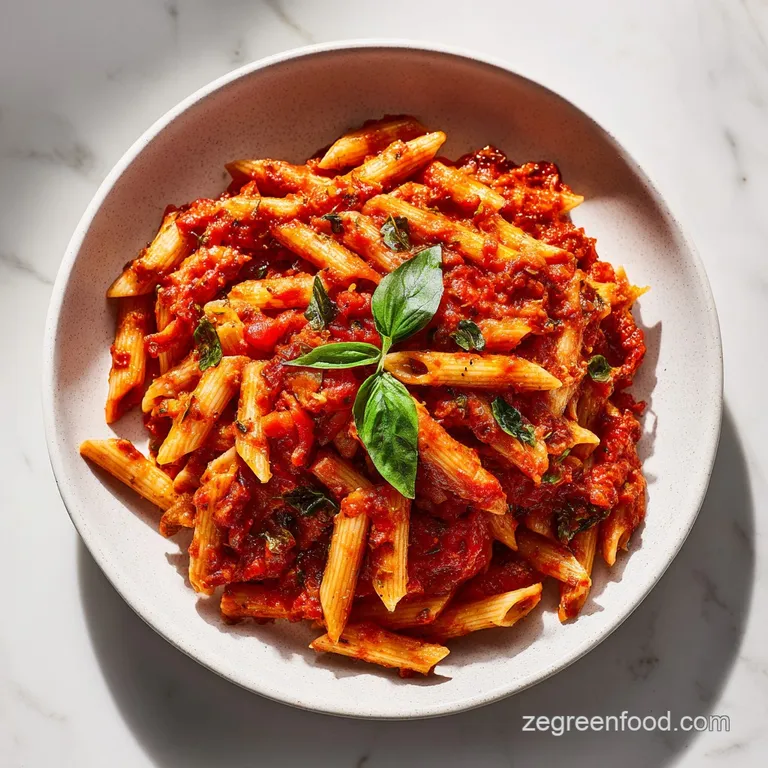
- Time: 5 min prep + 10 min cook = 15 mins (plus a few mins for simmering)
- Flavor/Texture Hook: Nutty, savory, and velvety
- Perfect for: Exhausted weeknights or beginner cooks
Easy Weeknight Lazy Pasta
That nutty, toasted garlic smell hits you first, cutting through the steam of a rainy Tuesday evening. I remember the first time I tried this method during a particularly brutal November.
I was staring at a pile of laundry, my brain was fried from work, and the thought of boiling a massive pot of water, draining it, and then cleaning a separate sauce pan felt like climbing Everest. I just wanted something warm and comforting without the kitchen becoming a war zone.
I tossed everything into one pot, half expecting the pasta to turn into a gummy mess. But as the liquid reduced, something happened. The sauce didn't just coat the noodles, it fused with them. The result was this silky, rich meal that tasted like it had simmered for an hour, even though I'd barely put in any effort.
It's the kind of meal that feels like a hug in a bowl, specifically designed for those days when you're running on empty.
You can expect a dish that is hearty but doesn't leave you feeling sluggish. Because we're using whole wheat penne and vegetable broth, it's got a depth of flavor that's hard to find in typical "quick" meals. The nutritional yeast adds a cheesy, savory punch that keeps it plant based but satisfying.
Trust me, once you go one pot, you'll never want to go back to the old school draining method.
The Secret Sauce Logic
Starch Retention: Since we don't drain the water, the starch from the wheat penne stays in the pot. This acts as a natural thickener, turning the broth into a velvety sauce.
Liquid Absorption: The pasta absorbs the seasoned broth and tomato juice instead of plain water. This means the flavor is infused into the core of the noodle, not just sitting on top.
Simmering Control: Cooking under a lid creates a mini oven effect. This ensures the pasta cooks evenly while the sauce reduces at a steady pace.
Cook Method Comparison
| Method | Time | Texture | Best For |
|---|---|---|---|
| One Pot | 20 min | Velvety & Integrated | Busy nights |
| Traditional | 30 min | Clean & Distinct | Classic plating |
| Oven Baked | 45 min | Crispy Edges | Meal prep |
Component Deep Dive
| Ingredient | Science Role | Pro Secret |
|---|---|---|
| Whole Wheat Penne | Structure & Starch | Use a sturdy shape to avoid mush |
| Nutritional Yeast | Savory Umami | Adds a "cheesy" vibe without dairy |
| Vegetable Broth | Flavor Base | Low sodium lets you control the salt |
| Crushed Tomatoes | Acidity & Body | Provides the thick, saucy consistency |
Essential Kitchen Tools
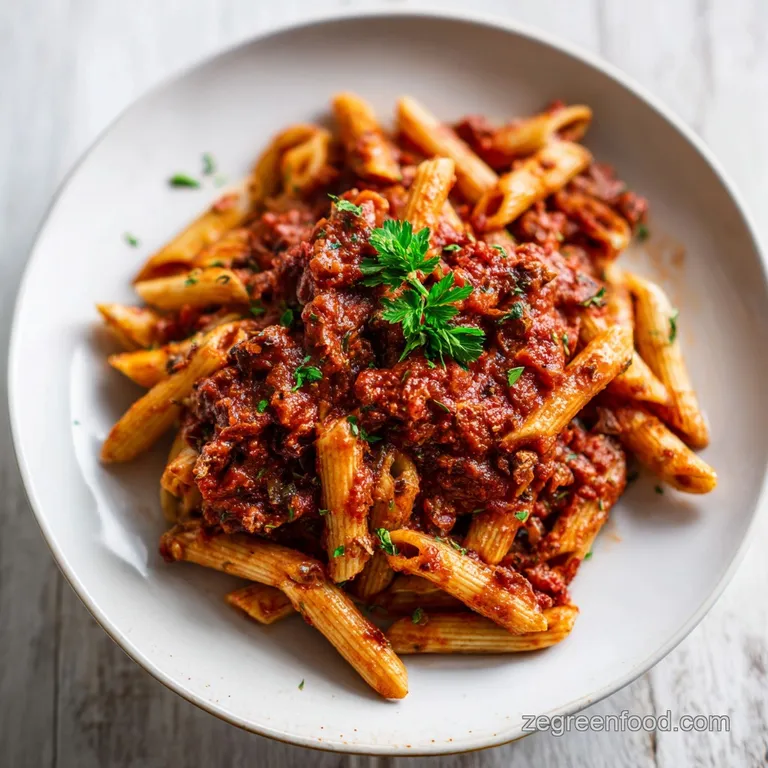
You don't need a fancy arsenal for this. A medium sized pot or a deep skillet is your best friend here. I prefer a pot with a tight fitting lid to keep the steam in, which helps the pasta cook faster and more evenly.
If you have a silicone spatula, it's great for scraping the bottom of the pot to make sure nothing sticks during the simmer.
A sharp chef's knife for the onion and garlic is obviously helpful, but honestly, if you're feeling truly lazy, a small food processor can knock out the chopping in ten seconds. Just don't over process the garlic into a paste, or it might burn too quickly in the oil.
Step-by-step Process
- Heat the olive oil over medium heat in your pot. Note: Ensure the oil shimmers before adding aromatics to prevent soaking.
- Add the diced onion and minced garlic. Stir constantly for about 2 minutes until the onions become translucent and the garlic smells nutty and fragrant.
- Pour in the crushed tomatoes and vegetable broth. Note: Use a whisk or spoon to make sure the tomatoes are well integrated.
- Stir in the dry whole wheat penne.
- Bring the liquid to a gentle boil, then immediately reduce the heat to a simmer.
- Cover the pot and cook for 8-12 minutes. Stir occasionally to prevent sticking until the pasta is al dente and the sauce has thickened.
- Remove the lid and stir in the nutritional yeast and black pepper. Note: This is where the sauce becomes velvety.
- Fold in the fresh basil at the very last second until the leaves just wilt to preserve its vibrant green color.
Chef's Tip: If you want a deeper flavor, add a tiny pinch of sugar to the tomatoes. It cuts the acidity and makes the sauce taste more rounded.
Solving Pasta Problems
Why Your Pasta Is Mushy
This usually happens because of "carryover cooking." Even after you turn off the heat, the pasta keeps absorbing liquid. If you overcook it in the pot, it loses its structure. The fix is to pull the pot off the heat the second the pasta has a slight bite to it.
Fixing a Dry Sauce
Sometimes the broth evaporates faster than the pasta cooks, leaving you with a thick paste rather than a sauce. Don't panic. Just splash in a bit more vegetable broth or water at the end to loosen it up.
| Problem | Root Cause | Solution |
|---|---|---|
| Pasta is too hard | Not enough liquid/time | Add 1/4 cup broth and simmer 2 more mins |
| Sauce is too thin | Lid was off/under simmered | Simmer uncovered for 2-3 mins |
| Garlic tastes bitter | Overheated/Burned | Start over; keep garlic moving in oil |
Common Mistakes Checklist
- ✓ Pat your onion pieces dry after cutting to avoid oil splatter
- ✓ Don't skip the lid; it's the only way to cook the pasta efficiently
- ✓ Stir every 3 minutes to prevent the bottom from scorching
- ✓ Add basil only after the heat is off to keep it from turning brown
- ✓ Use a medium pot; too large a pan causes the sauce to evaporate too fast
Ingredient Swaps Guide
If you're looking to change the profile, you can easily pivot this. If you're in the mood for something different, maybe a vegan saucy ramen would hit the spot, but for this specific dish, here is how to swap.
| Original Ingredient | Substitute | Why It Works |
|---|---|---|
| Whole Wheat Penne | Chickpea Pasta | Higher protein. Note: Thicker sauce, may need more broth |
| Vegetable Broth | Mushroom Broth | Deeper, earthier taste. Note: Stronger aroma |
| Nutritional Yeast | Vegan Parmesan | Similar salty, nutty profile. Note: More processed taste |
| Crushed Tomatoes | Tomato Purée | Smoother texture. Note: Less chunky, more uniform |
Right then, if you're scaling this for a crowd, remember that you can't just double everything linearly.
Adjusting for More People
When doubling the recipe, increase the pasta and tomatoes by 2x, but only increase the broth by 1.5x. Because there is more volume in the pot, less liquid evaporates, and using a full 2x amount of broth often results in a soup rather than a sauce.
Also, give yourself an extra 3-5 minutes of simmering time, as the larger mass takes longer to reach temperature.
Making a Single Serving
For a half batch, use a smaller skillet. Reduce the simmering time by about 20% and keep a close eye on the liquid levels. I recommend beating one egg (if you aren't vegan) or adding a tablespoon of cashew cream to a single serving to keep it from drying out.
Storage and Scraps
Store any leftovers in an airtight container in the fridge for up to 4 days. The pasta will continue to absorb the sauce as it sits, so when you go to reheat it, it will likely look a bit dry.
To reheat, add a tablespoon of water or broth and microwave for 2 minutes, stirring halfway through. This re emulsifies the sauce and brings back that velvety texture. I don't recommend freezing this particular dish, as whole wheat pasta can get a grainy texture after thawing.
For zero waste, don't toss those onion skins or the ends of the garlic cloves. Throw them into a freezer bag with other veggie scraps. Once the bag is full, boil them all together to make your own homemade vegetable broth for the next time you make this.
Perfect Meal Pairings
Since this is a hearty, savory dish, you want something bright or crisp on the side to balance it out. A simple arugula salad with lemon vinaigrette is my go to. The bitterness of the greens cuts through the richness of the nutritional yeast.
If you're feeling fancy, you can serve this alongside some garlic rubbed crostini. For other plant based dinner ideas, you might enjoy a vegan Tuscan pasta for a similar vibe but with a creamier, garlic heavy profile.
Another great option is roasted broccoli or sautéed spinach. Adding a green vegetable directly into the pot during the last 3 minutes of simmering is a great way to boost the nutrient density without adding another pan to the cleanup.
Just make sure the veggies are cut small so they cook through quickly.
Recipe FAQs
Does the pasta need to be pre-boiled?
No, it cooks directly in the sauce. This method allows the pasta to absorb the flavor of the broth and tomatoes. If you enjoy the efficiency of this one pot approach, it is a great way to save on cleanup.
How to prevent the pasta from sticking to the bottom?
Stir every 3 minutes and keep the lid on. The lid traps essential steam to cook the pasta efficiently, while regular stirring prevents the starch from scorching.
Why should I add the fresh basil at the very end?
To preserve its vibrant green color. Adding the leaves while the heat is still high will cause them to turn brown and lose their fresh aroma.
Is it true I must drain the pasta before adding the sauce?
No, this is a common misconception. The pasta is designed to absorb the vegetable broth and crushed tomatoes, creating a naturally thickened sauce without any draining required.
How to reheat leftovers so they aren't dry?
Add a tablespoon of water or broth before microwaving for 2 minutes. Stirring halfway through helps re-emulsify the sauce to bring back the velvety texture.
Can I freeze this dish for long-term storage?
No, avoid freezing this recipe. Whole wheat penne can develop a grainy texture after thawing, which negatively affects the mouthfeel of the dish.
Does the pot size affect the final result?
Yes, use a medium pot. A pan that is too large causes the liquid to evaporate too quickly, which can leave the pasta undercooked or the sauce too dry.
Lazy Pasta in 15 Minutes: A Velvety One-Pot Plant-Based Meal