Vegan Creamy Tomato Basil Soup Recipe
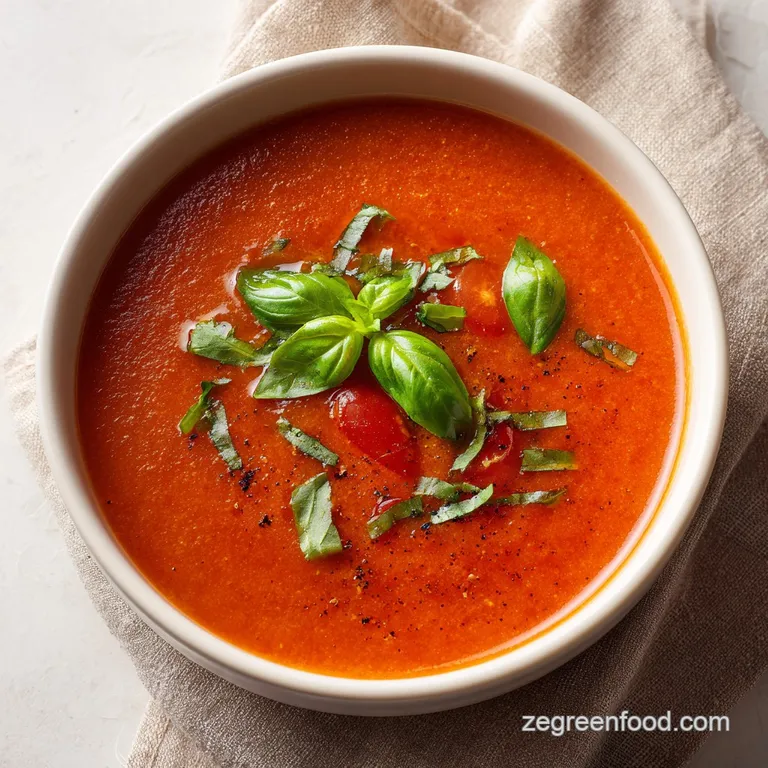
- Time: Active 15 minutes, Passive 45 minutes, Total 60 minutes
- Flavor/Texture Hook: Blistered, smoky sweet, and velvety
- Perfect for: Cozy weeknight dinners or meal prepped lunches
- Master the Vegan Creamy Tomato Basil Soup
- Why This Plant Based Bowl Works
- Component Analysis of the Ingredients
- Gathering Your Fresh Produce Essentials
- Equipment Needed for Silky Textures
- Instructions for the Richest Result
- Troubleshooting Common Soup Texture Issues
- Scaling Recipes for Large Families
- Myths About Dairy-Free Creaminess Debunked
- Storage and Zero Waste Tips
- Best Sides for Dipping Bread
- Recipe FAQs
- 📝 Recipe Card
Master the Vegan Creamy Tomato Basil Soup
You know that sound when you pull a sheet pan of roasted vegetables out of a 400°F oven? That specific, crackling hiss as the tomato skins finally give way and release their concentrated juices? It's the sound of pure flavor.
I remember the first time I tried making a dairy-free version of this classic. Honestly, I was terrified it would just taste like a thin, watery pasta sauce. I spent an hour hovering over the stove, adding bits of this and that, trying to find that elusive richness.
Then, I discovered the magic of charring everything first. When those Roma tomatoes get blistered and the garlic cloves turn into soft, golden butter inside their skins, something chemical happens. The kitchen fills with this heavy, sweet aroma that tells you you're about to eat something special.
We aren't just making a quick vegan creamy tomato basil soup here, we're building layers of roasted goodness that make you forget the cream was ever missing.
Trust me on this one, you won't even miss the butter. I've served this to my most dairy obsessed friends, and they were scraping the bowl for every last drop. It’s become a family favorite in our house, especially on those rainy Tuesdays when everyone just needs a bit of plant based comfort food.
We're going to use simple techniques to get a result that feels fancy but is actually quite humble.
Why This Plant Based Bowl Works
- Maillard Magic: Roasting the tomatoes at 400°F (200°C) triggers the Maillard reaction, which creates hundreds of new flavor compounds that raw tomatoes simply don't have.
- Emulsified Richness: The high fat content in full fat coconut milk binds with the tomato pectin during high speed blending, creating a stable, velvety emulsion that mimics heavy cream.
- Aromatic Infusion: Charring the garlic inside the skin prevents bitterness while caramelizing the natural sugars, providing a mellow, nutty backbone to the acidity.
- Pectin Power: Tomatoes are naturally high in pectin, which acts as a thickening agent when the cell walls are broken down through roasting and blending.
| Method | Time | Texture | Best For |
|---|---|---|---|
| Stovetop | 35 mins | Brighter, thinner | Quick lunch |
| Oven Roast | 60 mins | Deep, concentrated | Weekend dinner |
| Slow Cooker | 4 hours | Mellow, integrated | Set and forget |
Roasting really is the key differentiator here. While a stovetop simmer is faster, it doesn't allow the natural sugars in the Roma tomatoes to caramelize against the heat of the pan. That concentration of flavor is what gives this basil soup its "simmered all day" vibe in just about an hour of total time.
It’s a trick I learned after too many batches of watery soup that tasted more like canned juice than a bistro quality meal.
Component Analysis of the Ingredients
| Ingredient | Science Role | Pro Secret |
|---|---|---|
| Roma Tomatoes | Bulk & Pectin | Use only ripe fruit for the highest sugar content and best texture. |
| Coconut Milk | Fat & Body | Shake the can vigorously before opening to ensure the fat is evenly distributed. |
| Fresh Basil | Volatile Oils | Add 80% at the end to keep the bright green color and herbal notes intact. |
| Balsamic Glaze | Acid Balance | A tiny drop cuts through the fat of the coconut milk for a brighter finish. |
The science of a good soup often comes down to balancing pH levels. Tomatoes are naturally acidic, and while roasting mellows them, the addition of coconut milk brings a necessary fat component that coats the tongue. This allows the herbal notes of the basil to linger longer. If you’re a fan of these deep, earthy flavors, you might also enjoy the profile of a hearty Vegan Lentil Soup recipe on colder days.
Gathering Your Fresh Produce Essentials
For this recipe, we're sticking to high-quality, whole food ingredients that provide maximum impact. I always suggest going for the redder the better when it comes to your tomatoes.
- 3 lbs Roma tomatoes: These have less water and more flesh, making them the gold standard for roasting.
- 1 large yellow onion: It provides a sweet, sulfurous base that rounds out the sharper tomato notes.
- 6 cloves garlic: Keep the skins on during roasting! It protects them from burning and results in a jam like texture.
- 13.5 oz full fat canned coconut milk: This is our dairy substitute. Note: Full fat is non negotiable for that silk like mouthfeel.
- 1 cup fresh basil leaves: Packed tight. Fresh is the only way here; dried basil won't give you that punchy finish.
- 2 cups vegetable broth: This thins the roasted concentrate to your desired consistency.
- 1 tbsp tomato paste: Think of this as a flavor booster for an even deeper red color.
- 1 tsp dried oregano & 0.25 tsp red pepper flakes: For a subtle Italian inspired heat and earthiness.
- Sea salt & cracked black pepper: To season at every stage.
- 3 tbsp extra virgin olive oil: For roasting the base.
- 1 tsp balsamic glaze: The secret weapon for a tangy, professional finish.
| Original Ingredient | Substitute | Why It Works |
|---|---|---|
| Roma Tomatoes | San Marzano (canned) | High flesh to seed ratio. Note: Drain well before roasting. |
| Coconut Milk | Cashew Cream | Similar fat content. Note: Adds a subtle nutty flavor but no coconut scent. |
| Balsamic Glaze | Lemon Juice | Provides acidity. Note: Lacks the sweetness of balsamic, so add a pinch of sugar. |
Using Roma tomatoes is a choice I made after experimenting with cherry tomatoes, which are too sweet and watery, and beefsteak tomatoes, which can be a bit bland when heated. Romas have that sturdy structure that holds up under the broiler. If you find yourself with extra vegetables in the fridge after this, they would be a great addition to a Creamy Vegan Potato recipe later in the week.
Equipment Needed for Silky Textures
You don't need a professional kitchen, but a few specific tools make this process much smoother. I personally swear by my heavy duty baking sheet. A thin one might warp under the high heat, and you want that even contact with the metal to get those blistered skins.
A high speed blender is your best friend here if you want that truly velvety, dairy-free creamy tomato basil soup texture. An immersion blender works too, but it might leave a few more "rustic" bits of tomato skin behind. If you use a standard blender, just be careful with the hot liquid.
Always remove the center plastic piece from the lid and cover it with a kitchen towel to let the steam escape, or you'll have a literal soup explosion on your ceiling.
Chef's Tip: Roast your garlic cloves in a small nest of foil with a drizzle of oil. This ensures they steam in their own juices while the tomatoes char around them, resulting in a much sweeter flavor profile.
Instructions for the Richest Result
- Prep the oven. Preheat to 400°F (200°C). Note: A hot oven is essential for charring rather than just stewing the vegetables.
- Arrange the vegetables. Place halved Roma tomatoes, quartered onions, and skin on garlic cloves on a large baking sheet.
- Season for roasting. Drizzle with 3 tbsp extra virgin olive oil and sprinkle with 1 tsp sea salt and 0.5 tsp black pepper.
- Roast until blistered. Bake for 45 minutes until the tomato skins are charred and onions are translucent.
- Squeeze the garlic. Carefully remove the garlic from their skins and discard the peels. Note: The garlic should be soft enough to spread like butter.
- Transfer to blender. Place the roasted vegetables (and all the juices from the pan) into a blender.
- Add the liquids. Pour in 2 cups vegetable broth, 1 tbsp tomato paste, 1 tsp dried oregano, and 0.25 tsp red pepper flakes.
- Blend until smooth. Process on high until no visible chunks remain and the mixture looks silky.
- Simmer and finish. Transfer to a pot over medium heat, stir in 13.5 oz coconut milk, and bring to a gentle simmer for 5 minutes.
- Infuse the herbs. Stir in 1 cup fresh basil and 1 tsp balsamic glaze, then pulse with the immersion blender or stir vigorously.
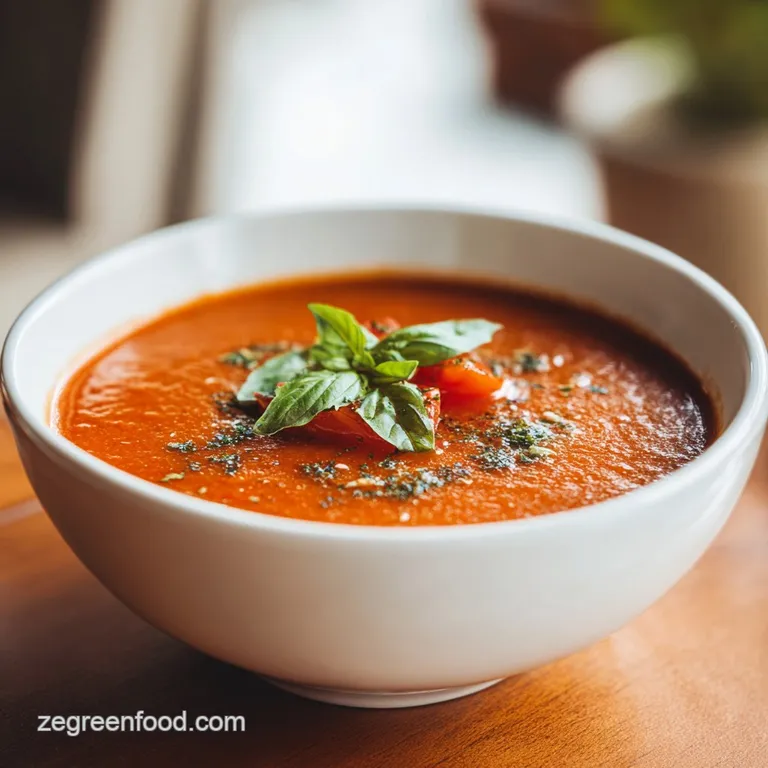
When you're blending, you'll see the color change from a deep, dark red to a bright, vibrant orange red as the coconut milk incorporates. That's the moment the magic happens. It’s also the point where you should taste it. Does it need more salt? A bit more pepper?
This is your soup, make it taste exactly how you want it. The aroma of the fresh basil hitting the hot liquid is something you'll want to bottle up and keep forever.
Troubleshooting Common Soup Texture Issues
Why Your Soup Is Too Acidic
Sometimes, depending on the season, tomatoes can be a bit more tart than we’d like. If your soup tastes a bit sharp or sour, it usually means the natural sugars didn't caramelize enough, or the tomatoes weren't fully ripe.
Rescuing a Grainy Texture
If you find the soup feels a bit "bitty" on the tongue, it’s likely from the tomato skins or dried herbs not breaking down. This often happens if the blender isn't powerful enough or if the roasting time was cut short.
| Problem | Root Cause | Solution |
|---|---|---|
| Too thin | Too much broth | Simmer uncovered for 10-15 mins to reduce. |
| Too bland | Lack of salt/acid | Add a pinch more salt and another splash of balsamic glaze. |
| Separating | Poor emulsification | Blend on high for 60 seconds after adding coconut milk. |
Common Mistakes Checklist
- ✓ Don't peel the tomatoes before roasting; the skin provides that smoky, charred depth.
- ✓ Ensure the oven is fully preheated; roasting in a cold oven leads to soggy, steamed vegetables.
- ✓ Use full fat coconut milk only; lite versions will result in a watery, greyish soup.
- ✓ Add the fresh basil at the very end to prevent it from turning brown and bitter.
- ✓ Don't skip the balsamic glaze; that tiny hit of sugar and acid balances the whole bowl.
Scaling Recipes for Large Families
If you're cooking for a crowd, this recipe is incredibly easy to double. I often do this during meal prep Sundays because it freezes so well. Just make sure you have two large baking sheets so the tomatoes aren't crowded.
If they're touching too much, they'll steam instead of roasting, and you'll lose that beautiful char.
When scaling up, I recommend only increasing the red pepper flakes to 1.5x the original amount unless you want a very spicy soup. Spices can become overwhelming when doubled exactly. For the liquid, keep the vegetable broth at 3.5 cups for a double batch and adjust at the end if you want it thinner.
It's always easier to add more broth later than it is to simmer it down.
Myths About dairy-free Creaminess Debunked
One big misconception is that you need heavy cream to get a "thick" soup. In reality, the thickness comes from the fiber in the tomatoes and the fat in the coconut milk. People also often think that coconut milk will make the soup taste like a tropical dessert.
However, once you add the savory garlic, onion, and acidic tomatoes, the coconut flavor recedes into the background, providing only richness and a very faint, pleasant nuttiness.
Another myth is that you have to peel the tomatoes to get a smooth soup. If you have a decent blender, those skins completely disappear and actually contribute a lot of the deep red color and smoky flavor. Saving yourself the step of peeling also saves about 20 minutes of tedious work.
Trust the blender; it can handle it!
Storage and Zero Waste Tips
- Storage: This soup stays fresh in the fridge for up to 5 days. In fact, it often tastes better on day two after the flavors have had a chance to marry.
- Freezing: You can freeze this for up to 3 months. I like to freeze it in individual glass jars (leave an inch of space at the top for expansion) for easy grab and-go lunches.
- Zero Waste: Don't throw away those basil stems! While they are too tough for the soup, you can throw them into your vegetable scrap bag in the freezer to use for making your next batch of homemade broth.
- Reheating: Always reheat on the stovetop over low medium heat. Avoid boiling it vigorously, as this can cause the coconut milk to separate slightly.
Best Sides for Dipping Bread
What is a bowl of tomato soup without something to dip in it? The classic move is obviously a vegan grilled cheese. I love using a thick sourdough bread and a high-quality cashew based cheddar. The tang of the sourdough perfectly complements the sweetness of the roasted tomatoes.
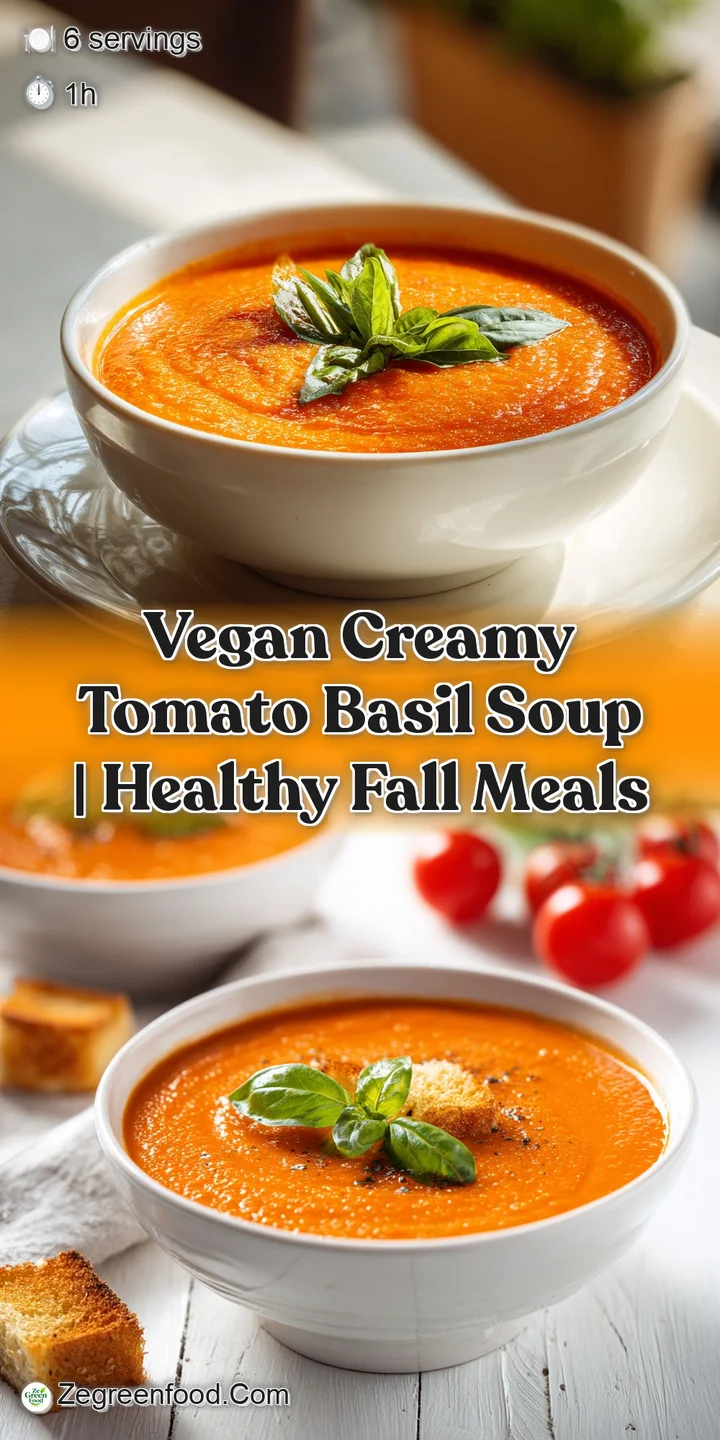
If you want something a bit lighter, a crusty baguette rubbed with a raw garlic clove is incredible. You can also garnish the soup with a few homemade croutons fried in olive oil and sea salt. For a full Mediterranean spread, try serving this alongside a fresh garden salad or even a small portion of Creamy Vegan Potato salad to add some cool contrast to the warm soup.
The beauty of this vegan creamy tomato basil soup is its versatility. You can keep it simple for a quick lunch or dress it up with microgreens and a swirl of coconut cream for a dinner party. However you serve it, that roasted flavor is going to shine through. Happy cooking!
Recipe FAQs
Can I substitute canned diced tomatoes for fresh Roma tomatoes?
No, this will negatively impact the texture. Canned tomatoes release too much water during roasting, resulting in a thinner, less concentrated flavor profile for your soup.
How to achieve that rich, creamy texture without heavy cream?
Blend in full fat canned coconut milk after roasting. The high fat content emulsifies with the tomato pectin during high speed blending, creating a stable, velvety mouthfeel that mimics dairy cream.
Why does my soup taste too acidic after blending?
Likely the tomatoes were not ripe enough or needed more roasting time. Add a teaspoon of balsamic glaze or a pinch of sugar to balance the acidity; this mirrors the flavor balancing technique used in our Vegan Lasagna Recipe with Spinach.
Is it necessary to roast the garlic with the skin on?
Yes, it is highly recommended for flavor. Roasting garlic inside its skin prevents the cloves from burning, ensuring they steam and caramelize into a sweet, buttery texture rather than becoming sharp and bitter.
How long can the soup be stored safely?
It keeps well in the refrigerator for up to five days. The flavors actually deepen overnight, so this soup is excellent for meal prepping lunches later in the week.
How to maximize the basil flavor without it turning brown?
Stir in the majority of the fresh basil leaves right at the end of cooking. Adding them off the heat preserves the bright color and the volatile oils that provide that fresh, pungent aroma.
What should I do if I don't have a high powered blender for the smoothest result?
Use an immersion blender and pass the soup through a fine mesh sieve afterward. This second straining step catches any larger skin or seed fragments missed by the immersion blender, ensuring a professional, rustic finish.
Vegan Creamy Tomato Soup
Ingredients:
Instructions:
Nutrition Facts:
| Calories | 258 kcal |
|---|---|
| Protein | 4.3 g |
| Fat | 21.3 g |
| Carbs | 16.5 g |
| Fiber | 3.5 g |
| Sugar | 8.8 g |
| Sodium | 533 mg |
