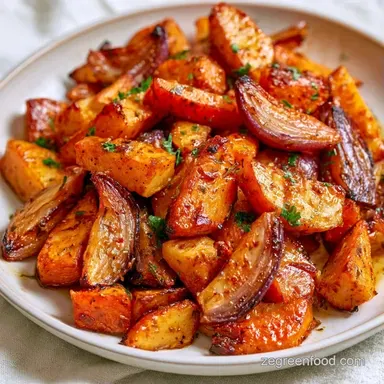
Crispy Roasted Fall Root Vegetables
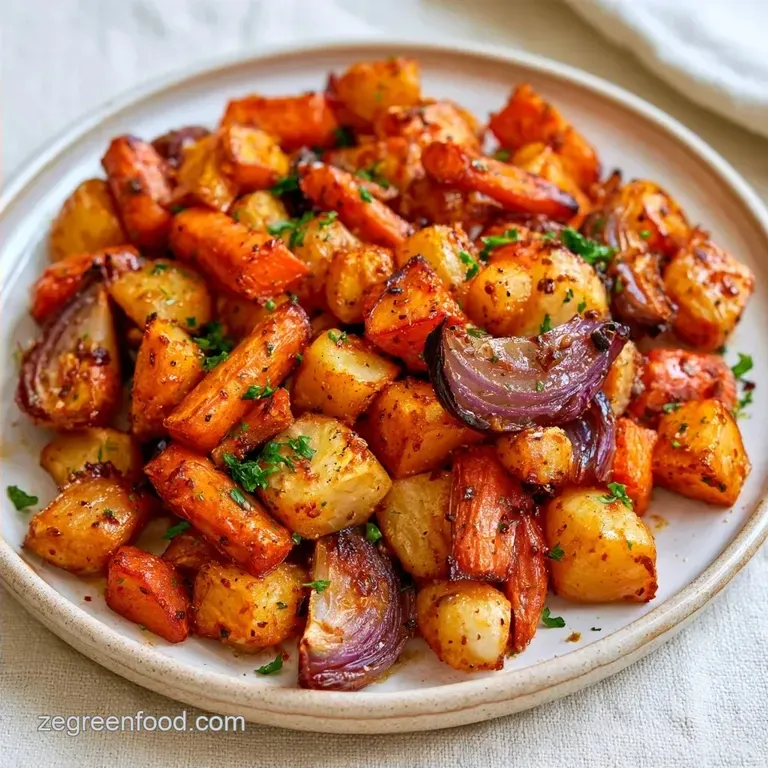
- Time: 15 min active + 45 min cook
- Flavor/Texture Hook: Mahogany crust with tender centers
- Perfect for: Family holiday dinners or meal prep
Roasted Fall Root Vegetables That Brown
I once served a tray of autumn veggies at a dinner party that looked like they'd been boiled in a bag. They were pale, limp, and honestly, a bit depressing. I had just dumped everything onto one pan, thinking the oven would do the heavy lifting, but I actually just created a giant steamer.
The fix is simpler than you'd think, but it requires a bit of discipline with your pan space. You need the hot air to hit every single side of the vegetable. If they're touching, they're steaming. If they're spaced out, they're roasting.
This approach to Roasted Fall Root Vegetables ensures you get those charred, caramelized edges that actually taste like something. We're going for a deep mahogany color and a texture that's firm but gives way easily.
Quick Setup and Timing
For this recipe, consistency is everything. You want your chunks to be exactly 1 inch so they all finish at the same time. Trust me, nothing is worse than a burnt carrot next to a raw piece of parsnip.
The heat needs to be high, and the pan needs to be huge. If you're tempted to squeeze everything onto one sheet, don't. Just grab a second pan. It's the only way to avoid that soggy mess I mentioned.
Right then, here is how the timing breaks down for a standard batch.
| Method | Time | Texture | Best For |
|---|---|---|---|
| Fresh Cut | 45 min | Crispy/Tender | Holiday Meals |
| Pre cut Mix | 35 min | Softer | Quick Weeknights |
The Shopping List
You can find everything you need at any standard grocery store; just head to the produce aisle for a few basics. I suggest using a variety of colors to make the final dish more visually appealing.
To prepare a batch of Roasted Fall Root Vegetables, gather these ingredients: - 1 lb carrots, peeled and sliced into 1 inch chunks - 1 lb parsnips, peeled and sliced into 1 inch chunks - 1 lb sweet potato, peeled and cubed into 1 inch pieces - 2 cups butternut squash, cubed into 1 inch pieces - 1 large red onion, cut
Into thick wedges - 3 tbsp extra virgin olive oil - 1 tbsp balsamic vinegar - 1 tbsp fresh rosemary, finely chopped - 1 tbsp fresh thyme, leaves stripped - 1 tsp kosher salt - ½ tsp freshly ground black pepper
I've found that fresh herbs make a world of difference. Dried rosemary can sometimes have a texture like pine needles, so stick with fresh if possible.
| Ingredient | Role | If You Don't Have It |
|---|---|---|
| Balsamic Vinegar | Adds tang and color | Apple cider vinegar (less sweet) |
| Parsnips | Earthy, peppery flavor | Extra carrots or celery root |
| Fresh Thyme | Herbal brightness | Dried thyme (use half the amount) |
To make the most of your autumn harvest, you might also enjoy my butternut squash soup as a starter.
| Original Ingredient | Substitute | Why It Works |
|---|---|---|
| Sweet Potato | Pumpkin Chunks | Similar density. Note: Pumpkin softens faster |
| Olive Oil | Avocado Oil | Higher smoke point. Note: Neutral flavor |
| Rosemary | Sage | Both are woody herbs. Note: Sage is more pungent |
The Right Kitchen Gear
While you can get by with basic gear, a few specific items make this much simpler. A large mixing bowl is essential so you can toss everything together without sending carrots flying across the kitchen.
The real star is an extra large sheet pan. I recommend lining it with parchment paper to keep the balsamic glaze from sticking to the pan and to ensure a quick cleanup.
Lastly, use a sturdy spatula for flipping. You'll want a tool that slides easily under the vegetables to avoid crushing the squash into mush.
Step by step Roasting
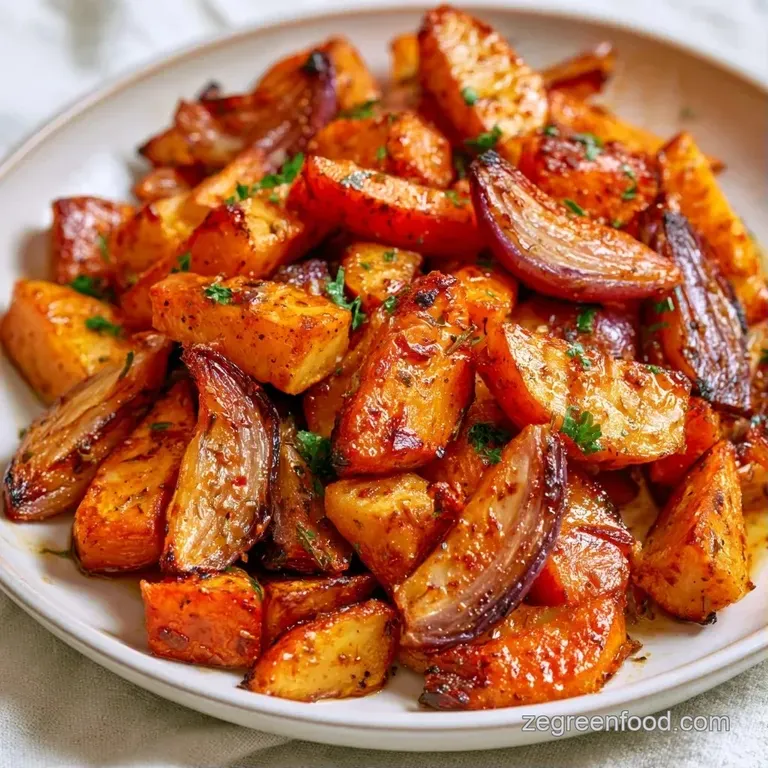
Let's begin. This is where the deep flavors are created.
- Set your oven to 400°F (200°C). Note: Ensure it is fully heated so the pan is searing hot when the vegetables are added.
- In a large bowl, whisk the olive oil, balsamic vinegar, chopped rosemary, thyme, salt, and pepper together.
- Stir in the sliced carrots, parsnips, sweet potato, butternut squash, and red onion, tossing until well-coated.
- Arrange the vegetables on an extra large sheet pan lined with parchment. Avoid overlapping to prevent them from steaming.
- Roast for 20-25 minutes until the edges start to brown and they smell aromatic.
- Use a spatula to flip the vegetables, allowing all sides to sear.
- Return to the oven for another 20 minutes until they develop a mahogany crust and velvety centers.
- Remove from the heat and let them rest for 5 minutes before serving.
Fixing Common Roast Issues
Plans don't always go perfectly; most issues stem from either too much moisture or incorrect heat levels.
Fixing Pale Veggies
If your Roasted Fall Root Vegetables are pale and soft, the pan is likely overcrowded. This traps moisture, steaming the vegetables instead of roasting them. To correct this mid-roast, transfer some of the vegetables to a second pan immediately.
Solving Uneven Cooking
When some pieces are charred while others are still raw, it is usually an issue with how they were cut. The 1 inch rule is essential; without it, smaller pieces will shrivel before the larger ones are cooked through.
Dealing With Burnt Edges
Balsamic vinegar contains natural sugars that can scorch if the oven is too hot or the oil coating is too thin. If they are browning too quickly, place a baking sheet on the rack below to block some of the direct heat.
| Problem | Root Cause | Solution |
|---|---|---|
| Soggy Texture | Overcrowded pan | Use two pans; leave space |
| Hard Centers | Pieces too large | Cut into uniform 1 inch chunks |
| Bitter Taste | Burnt balsamic | Lower temp by 25°F next time |
Changing Up the Flavor
Once you've got the basic method down, you can play with the seasoning. I usually stick to the classics, but a few tweaks can totally change the vibe of these Roasted Fall Root Vegetables.
Sweet and Savory
Add a drizzle of maple syrup or honey to the oil mix. The sugar caramelizes with the balsamic for a glaze that's a bit more dessert like, which kids usually love.
Bold Umami Punch
Swap the balsamic for a mix of soy sauce and a touch of toasted sesame oil. This gives the roots a savory, salty depth that works great with an Asian inspired main course.
Plant Based Brightness
Squeeze some fresh lemon juice over the pan the second it comes out of the oven. The acid cuts through the richness of the oil and wakes up the earthy flavors of the parsnips.
Earthy Twist
Toss in some halved Brussels sprouts or chunks of cauliflower during the last 20 minutes of roasting. They don't need as much time as the carrots, so adding them late keeps them from burning.
Storage and Leftovers
They stay fresh longer than you'd think. Keep them in an airtight glass container for 4 days chilled. To maintain that crisp crust, skip the microwave; instead, heat them in a 350°F (180°C) oven for 10 minutes.
To minimize waste, save your vegetable scraps. If you opted for organic parsnips and carrots, store the peels in a freezer bag. Once you've collected enough, simmer them along with celery ends and onion skins to create a fast vegetable stock.
For any remaining portions, blend them with a splash of cream and broth to create a hearty, rustic puree.
The Best Side Pairings
Since these are quite rich and earthy, they need something bright or protein heavy to balance them out. They're a natural fit for a roast chicken or a glazed ham.
If you're keeping it plant based, this dish pairs well with a sweet potato bowl or some grilled tofu.
For a festive spread, I like to serve these alongside a crisp arugula salad with a lemon vinaigrette. The bitterness of the greens cuts right through the sweetness of the roasted squash.
Why This Method Works
It's all about how heat moves. Oil serves as a conduit, transferring heat from the metal surface to the vegetable skin far more effectively than air alone.
High Heat: 400°F is the ideal temperature to caramelize the sugars in root vegetables without making the insides mushy. Airflow: Leaving space between the vegetables allows steam to escape, which is essential for a crisp crust.
Let's debunk a couple of myths. Some believe blanching vegetables first saves time, but that's incorrect. Blanching introduces excess moisture, which works against you when trying to achieve a crunch.
Similarly, searing vegetables in a pan first doesn't actually "lock in" flavor. It's an unnecessary step that adds extra oil. As long as the pan isn't crowded, the oven handles the searing perfectly.
Scaling Your Portion
When cooking for more or fewer people, avoid simply multiplying the measurements blindly.
For smaller batches (1-2 people): Switch to a smaller pan while maintaining the same spacing. Cut the roasting time by roughly 20%, as smaller pans heat up more quickly.
For larger batches (12+ people): Roast in stages. Avoid piling 5 lbs of vegetables on a single sheet. Bump the salt and spices up to 1.5x, but leave the oil quantity as is to prevent greasiness.
| Goal | Change | Result |
|---|---|---|
| Firmer Bite | Roast 5 mins less | More "al dente" texture |
| Deeper Char | Increase to 425°F | Darker, smokier edges |
| Softer Centers | Cut into 1.5 inch chunks | Heartier, denser feel |
Once you stop crowding the pan, Roasted Fall Root Vegetables are a breeze. Just chop, toss, space, and roast. Trust me, using a second tray is worth the cleanup for that mahogany-colored crust.
Recipe FAQs
Which root vegetables are best for roasting?
Carrots, parsnips, sweet potatoes, butternut squash, and red onions work perfectly.
Tip: Cut them into uniform 1-inch chunks to ensure everything finishes cooking at the same time.
Is it true you must boil root vegetables before roasting?
Surprisingly, no.
Tip: Pat the sliced vegetables dry before oiling them to help create a better sear.
How to maximize the flavor of roasted vegetables?
Whisk olive oil, balsamic vinegar, and fresh herbs then toss with the vegetables.
Tip: If you enjoyed balancing these earthy tones, the same flavor logic applies to our Brussels sprouts salad.
Should I roast these at 400°F or 425°F?
Use 400°F (200°C) to ensure the centers soften without burning the exterior.
Tip: Let the oven fully heat up before adding the pan so the vegetables start searing immediately.
Is steaming better than roasting for these vegetables?
Actually, no.
Tip: Use a parchment-lined pan to prevent sticking without needing to add extra oil.
What causes the vegetables to become mushy?
Overcrowding the sheet pan creates steam instead of a sear.
Tip: Use an extra-large pan so no pieces overlap during the roasting process.
Crispy Roasted Fall Root Vegetables