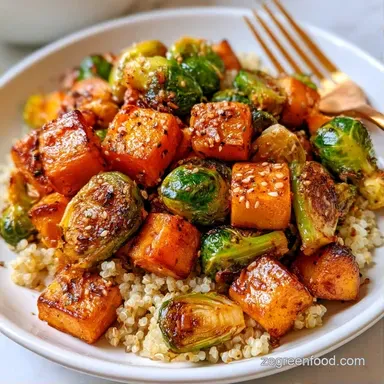
Autumn Harvest Quinoa Bowl with Roasted Squash
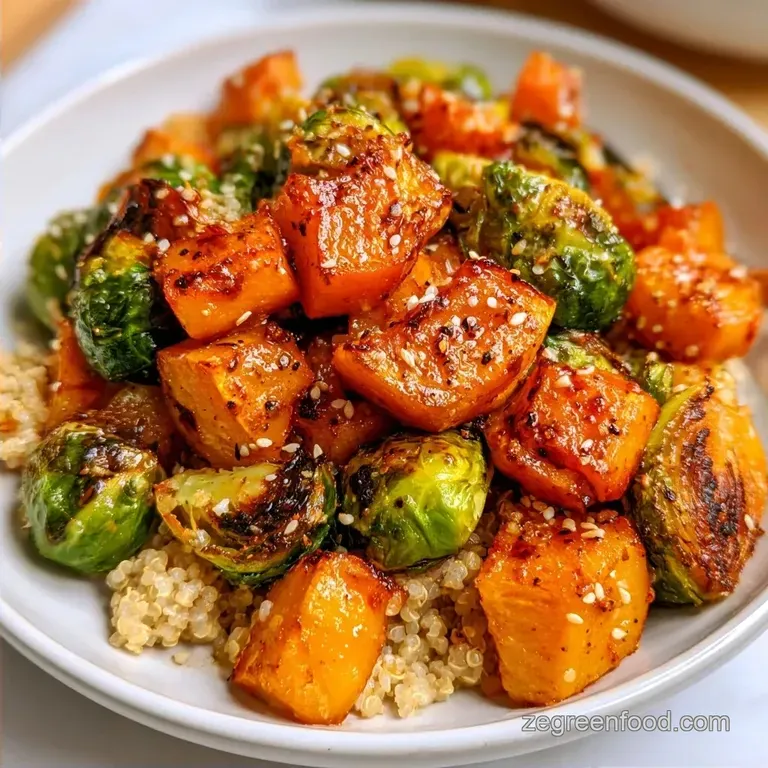
- Time: 15 min active + 25 min roasting/simmering
- Flavor/Texture Hook: Deeply browned, crisp vegetables paired with nutty, light grains
- Perfect for: Protein-rich meal prep or busy weeknight eating
The scent of Brussels sprouts roasting at 400°F is the ultimate signal that autumn has arrived. I used to view grain bowls as nothing more than cold piles of raw leaves, but adding heat transforms the dish.
The aroma of smoked paprika and caramelized squash makes this feel like a hearty feast rather than just a "health" bowl.
Butternut squash is the highlight of this recipe. I chose it for its creamy, dense consistency, which keeps it from turning into mush when mixed with dressing. Other root vegetables are fine, but squash provides a specific sweetness that balances the bitterness of the kale.
You can expect a dish that hits all the right notes. This Autumn Quinoa Bowl blends warm, roasted produce with fresh, crisp apple slices, creating a seasonal fuel that truly tastes like fall.
What Makes This Work
- High-Heat Roasting: Roasting at 400°F (200°C) caramelizes the sugars in the sprouts and squash, adding a smoky depth that keeps the bowl from tasting bland.
- Acid Balance: The balsamic vinegar in the dressing cuts through the rich olive oil and the earthiness of the quinoa.
- Textural Contrast: Mixing soft roasted vegetables with raw apple slices and toasted pepitas makes every bite more dynamic.
Depending on your schedule, you may prefer a different vegetable preparation. Here is how the options compare.
| Method | Time | Texture | Best For |
|---|---|---|---|
| Oven Roast | 25 mins | Caramelized edges, crisp | Peak flavor, hands-off |
| Stovetop Sear | 15 mins | Tender center, seared surface | Rapid meals, small batches |
Recipe Specs
This recipe is built for efficiency. You only need one sheet pan and one small pot to get everything done. Since we use a high protein base, it works as a standalone meal or a side.
Right then, let's look at the fuel components. We are focusing on complex carbs and plant based proteins to keep you full.
Ingredient Deep Dive
| Ingredient | What It Does | Best Swap |
|---|---|---|
| Butternut Squash | Adds creamy texture and sweetness | Sweet potato |
| Quinoa | Provides a nutty, high protein base | Farro or Millet |
| Balsamic Vinegar | Adds sharp acidity to balance fats | Apple cider vinegar |
| Maple Syrup | Glazes the veg and sweetens dressing | Honey |
Having a few swaps on hand is a lifesaver when the store is out of stock. Most of these changes won't alter the nutrition significantly.
Grocery List and Swaps
- 2 cups (450g) butternut squash, cubed small Why this? Holds shape better than pumpkin
- 2 cups (200g) Brussels sprouts, halved Why this? Adds a savory, charred contrast
- 2 tbsp (30ml) olive oil (for roasting)
- 1/2 tsp (3g) salt
- 1/4 tsp (1g) black pepper
- 1/2 tsp (2g) smoked paprika Why this? Gives a grilled flavor without a grill
- 1 cup (170g) uncooked quinoa, rinsed Why this? Complete protein source
- 2 cups (480ml) vegetable broth Why this? Adds way more flavor than water
- 1 tbsp (15ml) olive oil (for quinoa/kale)
- 2 cups (60g) kale, stems removed and torn
- 1 medium (150g) honeycrisp apple, thinly sliced Why this? High crunch, low mealy ness
- 1/4 cup (35g) dried cranberries
- 1/4 cup (30g) toasted pepitas
- 3 tbsp (45ml) extra virgin olive oil
- 2 tbsp (30ml) balsamic vinegar
- 1 tbsp (15ml) pure maple syrup
- 1 tsp (5g) Dijon mustard
- Pinch of salt
- Pinch of pepper
| Original Ingredient | Substitute | Why It Works |
|---|---|---|
| Quinoa | Brown Rice | Similar heartiness. Note: Takes longer to cook |
| Honeycrisp Apple | Granny Smith | More tartness, same crunch |
| Dried Cranberries | Dried Cherries | Similar sweetness and chew |
| Pepitas | Sliced Almonds | Similar crunch and healthy fats |
Necessary Kitchen Tools
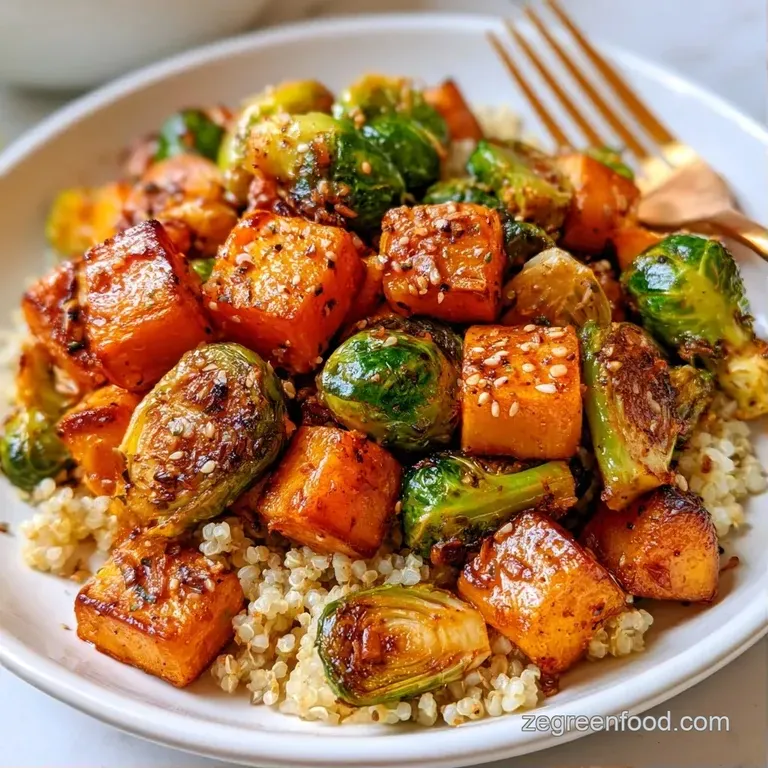
Basic gear is all that's required. Stick to the essentials for a quicker cleanup.
- Large rimmed baking sheet (to stop oil spills)
- Medium saucepan with a tight-fitting lid
- Small jar or whisking bowl (for the dressing)
- Fine mesh strainer (for rinsing quinoa)
- Chef's knife and cutting board
How to Build It
Phase 1: The Caramelized Roast
- Warm the oven to 400°F (200°C).
- On a baking tray, toss diced butternut squash and halved Brussels sprouts with olive oil, salt, pepper, and smoked paprika. Tip: Spread them in a single layer to ensure they brown rather than steam.
- Bake for 20-25 minutes, stirring once midway through, until the edges turn mahogany and crisp.
Phase 2: The Fluffy Grain Base
- Place the rinsed quinoa and vegetable broth into a saucepan.
- Bring the liquid to a boil, then lower the heat, cover, and simmer for 15 minutes.
- Take the pan off the heat and let the quinoa steam, covered, for 5 minutes, then fluff with a fork until the translucent spirals separate.
Phase 3: The Emulsified Glaze
- In a small jar, whisk together extra virgin olive oil, balsamic vinegar, maple syrup, Dijon mustard, salt, and pepper until the dressing is smooth and velvety.
Phase 4: The Final Assembly
- In bowls, layer the fluffed quinoa, roasted vegetables, torn kale, apple slices, dried cranberries, and toasted pepitas.
- Finish with a drizzle of the maple balsamic dressing.
Fixing Common Issues
Getting the quinoa texture right is usually the hardest part. If it comes out like porridge, you likely used too much liquid or stirred it too often during the simmer.
The kale can sometimes feel too tough or bitter if you just throw it in raw. A quick tip is to toss the kale with a teaspoon of the dressing first to soften the fibers.
If your vegetables didn't brown, the pan was probably too crowded. When the pieces touch, they release moisture and steam, which prevents that charred crust.
Quinoa Texture Issues
Bitter Kale Leaves
Pale Vegetables
| Problem | Root Cause | Solution |
|---|---|---|
| Mushy Quinoa | Too much broth or over stirring | Use exact 1:2 ratio; don't lift lid |
| Tough Kale | Raw fibers are too rigid | Massage kale with oil or dressing |
| Steamed Veg | Overcrowded baking sheet | Use two pans if necessary |
Ways to Change It
Use this Autumn Quinoa Bowl as a versatile foundation for additional toppings. To increase the protein for a more active day, try adding pan-seared tofu cubes or grilled chicken.
For a variety of vegetable options, visit my Roasted Fall Vegetables to see what else complements grains. Roasted parsnips or carrots are perfect additions.
If you prefer a different grain, farro provides a chewier bite, although it does require a longer cooking time than quinoa.
- For extra protein
- Mix in chickpeas or 4oz grilled chicken.
- For a nut free version
- Replace pepitas with sunflower seeds.
- For lower sugar
- Use half the amount of maple syrup.
You may need to scale the quantities depending on how many people you are feeding.
| Servings | Quinoa (Dry) | Broth | Roasted Veg (Total) |
|---|---|---|---|
| 2 Servings | 1/2 cup | 1 cup | 2 cups |
| 4 Servings | 1 cup | 2 cups | 4 cups |
| 6 Servings | 1.5 cups | 3 cups | 6 cups |
Keeping It Fresh
To keep the meal fresh over several days, store the ingredients separately. Place the quinoa and roasted vegetables in one container and the kale and fresh apples in another.
The dressing lasts roughly a week in a jar. Because the oil and vinegar separate, be sure to shake it well before use.
For more meal prep tips to keep your textures crisp, you can follow the approach used in my Butternut Squash Bowl.
- Fridge: 4-5 days in airtight containers.
- Freezer: The roasted vegetables and quinoa keep for up to 3 months; avoid freezing the kale or fresh apples.
- Zero Waste: Collect your squash peelings and Brussels sprout stems in a freezer bag to make your own vegetable broth later.
Ways to Serve It
This Autumn Quinoa Bowl is versatile enough to serve as a hearty lunch or a light dinner. I suggest using wide, shallow bowls to ensure the dressing reaches every layer.
If you're feeding a group, try setting this up as a "build-your-own" bar. Place the quinoa in a large bowl and arrange the toppings in smaller containers. This allows guests to customize their meal, whether they want to skip the cranberries or add extra pepitas.
To finish it off, a sprinkle of freshly cracked black pepper adds a final touch of heat. Trust me, it really brings the whole dish together.
The Truth About Grain Bowls
You may have heard that quinoa must be soaked for hours to eliminate bitterness. This is largely a myth. A quick rinse through a fine-mesh strainer removes enough saponins to prevent that soapy taste.
Another common misconception is that searing vegetables "seals in" their nutrients. While heat can break down certain nutrients, it actually makes others more bioavailable. The goal of the 400°F roast is to maximize flavor, not to preserve nutrients.
This Autumn Quinoa Bowl is all about the balance of nutrition and taste. Once your roasted vegetables and fluffy quinoa are prepared, the rest is simple assembly. Let's get started.
Recipe FAQs
Can I swap the butternut squash for something else?
Yes, sweet potatoes work beautifully. They provide a similar creaminess and sweetness. If you enjoy this flavor profile, the same root vegetable logic applies to our sweet potato kale salad.
Why does my quinoa turn out mushy?
You likely used too much liquid or skipped the resting phase. Ensure you use exactly 2 cups of broth for 1 cup of quinoa and let it sit covered for 5 minutes before fluffing.
How to achieve a mahogany crust on the vegetables?
Roast at 400°F (200°C) on a single layer. Overcrowding the pan creates steam, which prevents the edges from crisping and caramelizing.
Is it true that rinsing quinoa is optional?
False. Rinsing removes the bitter saponin coating from the grains, ensuring a clean, nutty taste.
Autumn Quinoa Bowl for 4 Servings