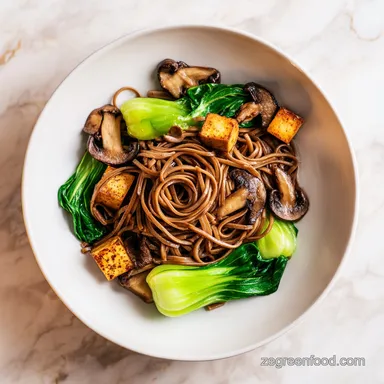
Bok Choy Wild Mushroom Miso Soba Bowl: Nutrient Dense
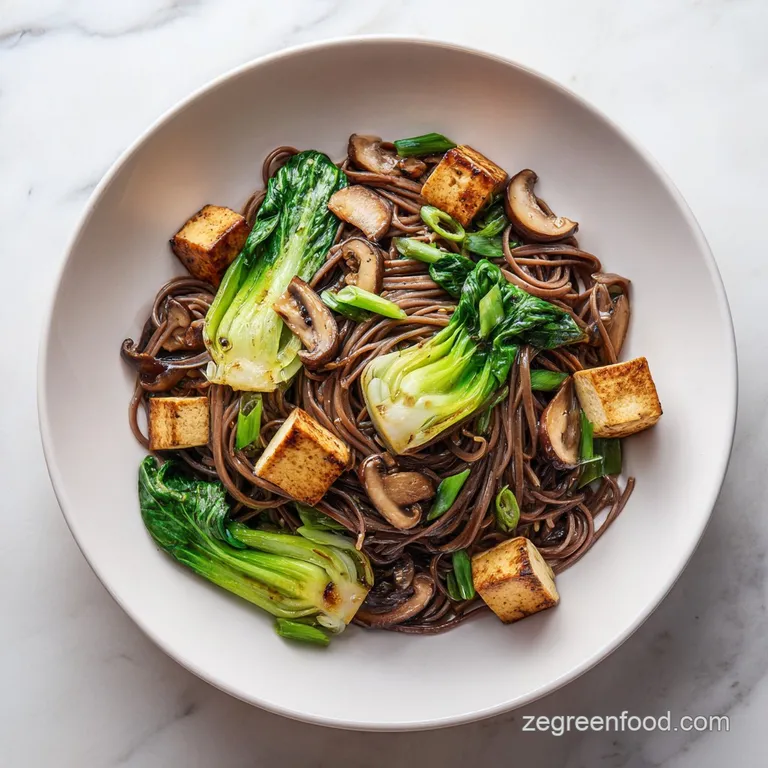
- Time: 10 min prep + 15 min cook = 25 min total
- Flavor/Texture Hook: Earthy, savory broth with a shatter crisp mushroom sear and velvety noodles
- Perfect for: High protein post workout fuel or a fast, nutrient packed weeknight dinner
That sharp, nutty sizzle of toasted sesame oil hitting a hot wok is the only alarm clock I need. There is something about the smell of wild mushrooms browning - that deep, woody aroma - that immediately tells your brain you are about to eat something seriously satisfying.
For a long time, I fell for the myth that a real miso based bowl required hours of simmering a kombu dashi stock from scratch. I thought that without a 12 hour steep, the flavor would be thin and one dimensional.
I was wrong. You don't need a culinary degree or an entire afternoon to get a professional grade umami hit. By focusing on the sear and the temperature of the miso, you can get a rich, power packed meal in under half an hour. This is about maximizing the ingredients you actually have in your fridge.
Here is the perfect recipe for a Bok Choy Wild Mushroom Miso Soba Bowl. It is designed for people who need their food to work as hard as they do - high in protein, dense in micronutrients, and fast enough to fit into a chaotic schedule.
We are talking about a bowl that fuels your brain and body without leaving you in a food coma.
How to Actually Nail This
The trick to a spot on Bok Choy Wild Mushroom Miso Soba Bowl isn't in a secret ingredient, it's in the sequence. If you throw everything in the pot at once, you get a bland, grey stew. To get that restaurant style depth, you have to treat the mushrooms and tofu like a steak - they need high heat and space to brown.
- 1. The Prep (10 mins)
- Chop the mushrooms, cube the tofu, and mince your aromatics. Get your water boiling for the noodles.
- 2. The Sear (7 mins)
- This is the non negotiable part. Brown the tofu and mushrooms until they are mahogany.
- 3. The Finish (8 mins)
- Build the broth, whisk in the miso, and assemble.
What Makes the Broth Velvety
- Miso Tempering: Whisking miso into a small amount of warm broth first prevents those annoying clumps of salty paste from floating in your soup.
- Starch Control: Rinsing the soba noodles in cold water removes excess surface starch, which keeps the broth clear and the noodles from becoming a sticky mass.
- Aromatic Bloom: Sautéing garlic and ginger for just 30 seconds wakes up the essential oils, adding a sharp, fresh contrast to the heavy umami.
| Method | Time | Texture | Best For |
|---|---|---|---|
| Fast (This Recipe) | 25 mins | Bold, punchy, fresh | Weeknights & Meal Prep |
| Classic (Dashi) | 2+ hours | Subtle, layered, clean | Slow Sundays |
Recipe Specs
When we talk about fuel, we look at the macros. This bowl is a powerhouse because it combines complex carbohydrates from the buckwheat (soba) with a double hit of plant based protein from the tofu and the noodles. It's designed to provide a steady release of energy rather than a sugar spike.
The timing is tight. With 10 minutes of prep and 15 minutes of active cooking, it's a 25 minute operation. I've found that if you prep your "mise en place" - having everything chopped and measured - the actual cooking part feels like a breeze.
It's a goal oriented process: sear, simmer, serve.
Ingredient Breakdown
For this to work, the quality of your miso and the variety of your mushrooms matter. I prefer a mix of shiitake and oyster mushrooms for a blend of meaty and delicate textures.
Component Analysis
| Ingredient | Science Role | Pro Secret |
|---|---|---|
| Miso Paste | Fermented Umami | Use white miso for sweetness, red for a salty punch |
| Soba Noodles | Complex Carb | Always rinse with cold water to stop the cook |
| Wild Mushrooms | Savory Depth | Don't salt them until they've already browned |
The Shopping List
For the Base
- 85g (3 oz) soba noodlesWhy this? Buckwheat provides a nuttier flavor and more protein than white pasta
- 470ml (2 cups) baby bok choy, halved lengthwise
- 235ml (1 cup) wild mushroom mix, slicedWhy this? A mix of shiitake and oyster adds textural variety
- 120g (1/2 cup) extra firm tofu, cubedWhy this? Holds its shape during the over high heat sear
For the Umami Broth
- 15ml (1 tbsp) toasted sesame oil
- 15ml (1 tbsp) tamariWhy this? gluten-free alternative to soy sauce with a richer taste
- 710ml (3 cups) low sodium vegetable broth
- 30g (2 tbsp) miso paste
- 15g (1 tbsp) fresh ginger, grated
- 2 cloves garlic, minced
- 5ml (1 tsp) rice vinegarWhy this? The acidity cuts through the salt of the miso
For the Garnish
- 1 stalk green onion, sliced
- 5g (1 tsp) toasted sesame seeds
- 5ml (1 tsp) chili oil
Substitution Guide
| Original Ingredient | Substitute | Why It Works |
|---|---|---|
| Tamari | Soy Sauce | Virtually identical salt profile. Note: Not gluten-free |
| Wild Mushrooms | Button Mushrooms | Cheaper and accessible. Note: Less earthy, more watery |
| Extra Firm Tofu | Tempeh | More protein and a nuttier taste. Note: Denser texture |
| Vegetable Broth | Water + Veggie Bouillon | Same base flavor. Note: Watch the sodium levels |
Essential Gear
You don't need a kitchen full of gadgets, but a few specific tools make this faster. A wok is my go to because the high sides and sloping shape allow for that intense sear without splashing oil everywhere. If you don't have one, a large stainless steel skillet works just as well.
You will also need a medium pot for the noodles, a small whisk or fork for the miso slurry, and a deep bowl for assembly. Using a deep bowl is key - it keeps the broth hot for longer and gives the noodles plenty of room to swim.
Step by step Method
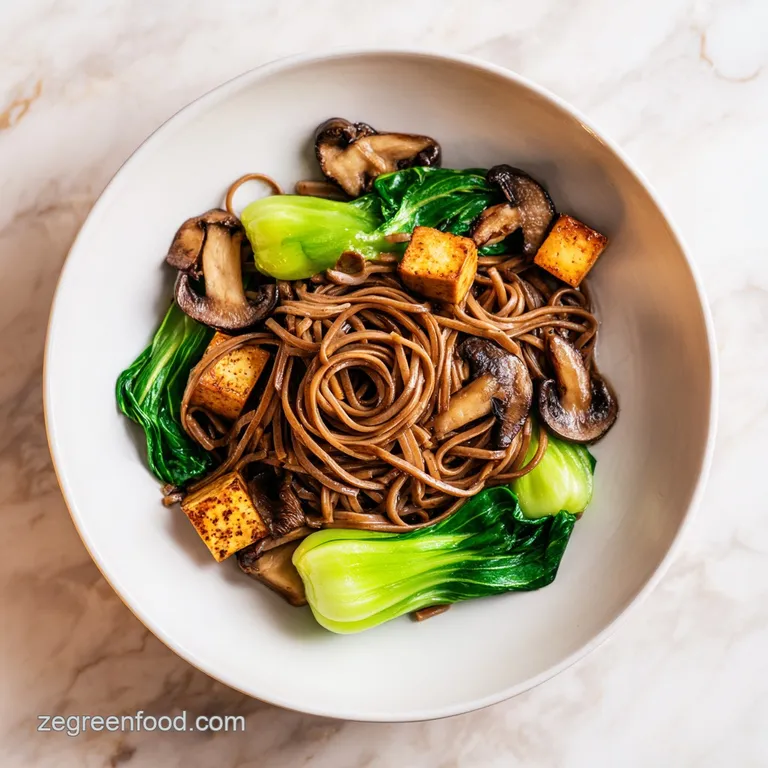
Let's get into the flow. Remember, the goal here is to keep the ingredients distinct so every bite has a different texture.
Preparing the Base
- Boil a large pot of water and cook the soba noodles according to the package directions. Cook until tender but still with a slight bite.
- Drain the noodles and immediately rinse them under cold running water. Note: Keep rinsing until the water runs clear to remove the starch.
- Set the cooled noodles aside.
Searing the Umami
- Heat the toasted sesame oil in a wok over medium high heat until it shimmers.
- Add the cubed tofu and sliced mushrooms in a single layer. Cook undisturbed for 3-4 minutes until the mushrooms are mahogany colored and the tofu is golden.
- Stir in the tamari and cook for 1 more minute until the liquid glazes the vegetables.
- Remove the tofu and mushrooms from the pan and set them aside on a plate.
Crafting the Broth
- In the same wok, sauté the minced garlic and grated ginger. Cook for 30 seconds until fragrant but not brown.
- Pour in the vegetable broth and rice vinegar. Bring the mixture to a gentle simmer.
- In a small bowl, whisk 2 tablespoons of the warm broth into the miso paste until a smooth slurry forms.
- Stir the slurry back into the main pot and remove from heat immediately. Note: Boiling miso destroys the delicate probiotics and alters the flavor.
Assembling the Bowl
- Place the rinsed soba noodles into a deep bowl.
- Ladle the hot miso broth over the noodles.
- Arrange the seared mushrooms, tofu, and halved baby bok choy on top.
- Garnish with sliced green onion, toasted sesame seeds, and a drizzle of chili oil.
Troubleshooting Your Bowl
Even the best plans can hit a snag. Usually, it comes down to heat management or timing.
Why Your Soba Is Mushy
Overcooking soba is the most common mistake. Because buckwheat is more fragile than wheat, the window between "perfect" and "mush" is tiny. Always undercook them by about 30 seconds and rely on the hot broth to finish them.
Solving Lumpy Miso
If you drop a clump of miso paste directly into a large pot of broth, it will stay in a ball. The outer layer cooks and seals the inside. This is why the slurry method is mandatory. If you already have lumps, you can use a handheld frother to blend them in.
Preventing Watery Mushrooms
If you crowd the pan, the mushrooms will steam in their own moisture instead of searing. This results in a rubbery texture instead of a crisp, mahogany finish. Cook them in batches if your pan is small.
| Problem | Root Cause | Solution |
|---|---|---|
| Mushy Noodles | Overcooked in boiling water | Rinse in ice water immediately |
| Bland Broth | Miso was boiled too long | Stir miso in at the very end |
| Pale Mushrooms | Pan wasn't hot enough | Use a stainless steel pan on high |
Common Mistakes Checklist
- ✓ Did you rinse the noodles until the water ran clear?
- ✓ Did you leave the mushrooms undisturbed for 4 minutes?
- ✓ Did you remove the pot from heat before adding the miso?
- ✓ Did you use extra firm tofu (pressed if possible)?
- ✓ Did you avoid overcrowding the wok during the sear?
Customizing Your Bowl
This recipe is a baseline, but you can pivot it based on your goals for the day. If you're coming off a heavy lifting session, you might want to boost the protein.
Boosting the Protein To turn this into a true muscle building meal, double the tofu or add 100g of seared tempeh. If you aren't strictly plant based, sliced chicken breast or shrimp work beautifully. Just sear them in the sesame oil before the mushrooms. For those who want a different noodle texture, you might like this miso udon soup which uses thicker, chewier noodles.
Enhancing the Heat The chili oil is a great start, but for a real kick, add a teaspoon of Sriracha or gochujang to the miso slurry. If you're craving something with more kick, my red hot miso noodles are a total powerhouse.
Making it gluten-free Most soba is a mix of buckwheat and wheat. To make this fully gluten-free, check the label for 100% buckwheat noodles. According to guides on Serious Eats, 100% buckwheat noodles have a more intense, earthy flavor and a slightly grainier texture than the blended versions.
Low Sodium Swap Miso and tamari are salt heavy. To bring the sodium down, use "low sodium" miso and swap the tamari for coconut aminos. You can also increase the amount of fresh ginger and rice vinegar to maintain the flavor profile without the salt.
Storage and Zero Waste
Because of the noodles, this dish is best enjoyed immediately. However, for meal prep, you can store the components separately.
Fridge and Freezer Guidelines Store the seared tofu and mushrooms in an airtight container for up to 4 days. Keep the miso broth in a separate jar (up to 5 days). Store the cooked, rinsed noodles with a teaspoon of sesame oil to prevent them from sticking.
When ready to eat, heat the broth, add the noodles, and top with the seared goods. I don't recommend freezing the bok choy as it loses its structure and becomes watery.
Zero Waste Kitchen Tips Don't toss your veggie scraps. Save the mushroom stems, the outer leaves of the bok choy, and the ends of the ginger and garlic in a freezer bag. Once the bag is full, simmer them in water for an hour to create a homemade vegetable stock.
This reduces waste and gives you a free base for your next Bok Choy Wild Mushroom Miso Soba Bowl.
Best Ways to Serve
Presentation matters because we eat with our eyes first. Arrange the toppings in clusters rather than mixing them in. Place the bok choy on one side, the tofu in the middle, and the mushrooms on the other. This makes the bowl look curated and keeps the textures distinct.
Pairing Suggestions This bowl is a complete meal, but if you're serving a crowd, pair it with a side of steamed edamame or a crisp cucumber salad with rice vinegar and sesame seeds. The coolness of the cucumber balances the heat of the chili oil and the richness of the miso broth.
Final Pro Tip If you find the broth is too thick, a splash of water or a bit more vegetable broth can loosen it up. If it's too thin, let it simmer for an extra 2 minutes before adding the miso.
Trust your palate - the balance between the salt of the miso and the zing of the rice vinegar is where the magic happens.
Critical in Sodium
2800 mg 2,800 mg of sodium per serving (122% 122% of daily value)
The American Heart Association recommends a daily sodium limit of no more than 2,300 mg, and ideally less than 1,500 mg for most adults to reduce the risk of cardiovascular disease.
Tips to Reduce Sodium in Your Soba Soup
-
Reduce Miso Paste-30%
Cut the miso paste amount in half or switch to a low-sodium miso variety to significantly lower the salt base.
-
Swap the Broth-30%
Replace the low-sodium vegetable broth with water or a homemade salt free vegetable stock.
-
Substitute Tamari-20%
Swap the tamari for coconut aminos, which offers a similar savory taste with much lower sodium content.
-
Modify Chili Oil-10%
Replace store-bought chili oil with fresh red pepper flakes and a drop of sesame oil to avoid hidden salts.
-
Enhance Aromatics
Increase the amount of fresh ginger, garlic, and green onions to add depth and flavor without adding sodium.
Recipe FAQs
Can I replace the tofu with a different protein?
Yes, firm tempeh or chickpeas work well. If you enjoy the savory profile of our Korean tofu, you can use the same protein prep here for a similar texture.
How to prevent miso paste from clumping in the broth?
Whisk 2 tablespoons of warm broth into the miso paste first. Stir this smooth slurry back into the main pot and remove from heat immediately to preserve the flavor.
Why must I rinse soba noodles under cold water?
It stops the cooking process and removes excess starch. This prevents the noodles from becoming mushy and ensures they don't stick together in the bowl.
Why are my mushrooms steaming instead of browning?
You are likely crowding the pan or stirring too often. Cook them undisturbed in a single layer for 3-4 minutes until they reach a mahogany color.
Is it true that miso paste needs to be boiled to be safe?
No, this is a common misconception. Boiling miso destroys its delicate probiotics and alters the taste, so always remove the pot from heat immediately after stirring it in.
How to meal prep this bowl for the week?
Store the components in separate airtight containers. Keep the broth in a jar for up to 5 days and toss the cooked noodles with a teaspoon of sesame oil to prevent sticking.
Can I sear the tofu and mushrooms at the same time?
Yes, as long as they are in a single layer. Heat sesame oil over medium high and cook both undisturbed for 3-4 minutes for a golden, seared finish.
Bok Choy Mushroom Soba Bowl