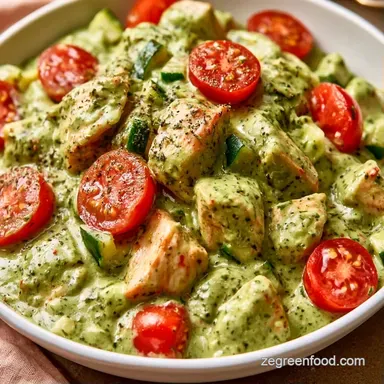
Creamy Basil Pesto Chicken with Cherry Tomatoes

- Prep15 Mins
- Cook20 Mins
- Servings4
- Time: 15 min prep + 20 min cook + 5 min resting
- Taste: Herby, creamy, and tangy with a hit of fresh garlic
- Best for: High-protein weekday fuel or a lean dinner for athletes
Creamy Basil Pesto Chicken
Pesto began in Genoa, Italy, as a way to use fresh basil and pine nuts. For generations, it has represented the brightness of the Mediterranean summer. This version takes those traditional flavors and pairs them with lean protein, turning a classic sauce into a filling, nutrient-dense meal.
This basil pesto chicken focuses on a fast, high-heat sear to keep the meat tender. You get a rich, savory sauce that coats every piece of chicken, making it an efficient choice for those who need a high-protein dinner.
Expect a dish that balances the richness of heavy cream with the acidity of cherry tomatoes. It is a simple, one-pan process that maximizes flavor while keeping the active work to a minimum.
Key Numbers
To get the best results, keep these three targets in mind:
- Chicken Size: Cut breasts into 1-inch cubes for even cooking.
- Pan Space: Leave 1 inch of space between pieces to ensure they brown.
- Final Temp: Reach 165°F (74°C) internal temperature for safety.
Gathering Your Essentials
The quality of the pesto dictates the final flavor. If you use a store-bought version, look for one with a short ingredient list and no fillers.
| Ingredient | Role | If You Don't Have It |
|---|---|---|
| Chicken Breast | Main Protein | Chicken thighs (richer, more fat) |
| Basil Pesto | Primary Flavor | Nut-free pesto or homemade blend |
| Heavy Cream | Texture/Body | Full-fat coconut milk (adds tropical notes) |
| Parmesan Cheese | Salt/Umami | Pecorino Romano (saltier) |
The Full List
- 1½ lb boneless, skinless chicken breast, cut into 1-inch cubes
- 2 tbsp olive oil
- ½ tsp salt
- ½ tsp cracked black pepper
- 1 cup cherry tomatoes, halved
- 1 medium zucchini, diced into 0.5-inch pieces
- ½ cup prepared basil pesto
- ½ cup heavy cream
- ¼ cup chicken broth (low sodium)
- ¼ cup grated Parmesan cheese
- 1 tbsp unsalted butter
Essential Gear
Use a 12-inch stainless steel or cast iron skillet. These materials handle medium-high heat better than non-stick pans, which allows you to develop a better crust on the meat.
The Cooking Process
This basil pesto chicken follows a specific sequence: sear the meat, create the sauce, then merge them.
1. Prepare the meat
Pat the cubed chicken breast thoroughly dry using paper towels. Note: Moisture on the surface creates steam, which prevents browning. Season evenly with salt and pepper.
2. Sear the chicken
Warm olive oil in the skillet over medium-high heat. Once hot, arrange the chicken in a single layer with 1 inch of space between each piece. Sear for 3 to 4 minutes without moving them until a deep golden crust forms, then flip and cook for another 3 minutes.

3. Rest the protein
Remove the chicken from the pan once the thickest piece reaches an internal temperature of 160°F (71°C). Transfer to a plate and let it rest for 5 minutes to reach a safe internal temperature of 165°F (74°C) per USDA poultry guidelines.
4. Deglaze the pan
Lower the skillet heat to medium. Add the unsalted butter to the remaining pan drippings. Stir in the chicken broth, scraping up the brown bits from the bottom.
5. Build the sauce
Whisk in the basil pesto and heavy cream. Simmer gently for 2 minutes. Stir in the grated Parmesan cheese until the sauce is velvety and thickened.

6. Add vegetables
Add the diced zucchini and halved cherry tomatoes. Cook for 3 to 5 minutes until tomatoes soften slightly and zucchini is tender-crisp.

7. Finish and coat
Return the rested chicken and any accumulated juices to the pan. Toss gently to coat in the sauce. Ensure chicken is heated through to 165°F (74°C) before serving.
Pro Tips and Pitfalls
Fixing Separated Sauce
If the sauce looks oily, the pesto has likely overheated. Lower the heat and whisk in a tablespoon of warm chicken broth or a splash of cream to bring the emulsion back together.
Avoiding Rubbery Chicken
Rubbery meat happens when you crowd the pan or overcook the breast. Stick to 1-inch cubes and use a thermometer. Removing the meat at 160°F and letting carryover heat do the rest is the best way to keep it tender.
Managing Vegetable Texture
Adding the zucchini and tomatoes at the very end prevents them from turning into mush. The zucchini should still have a slight snap to it when you plate the dish.
Creative Twists and Swaps
You can adjust this basil pesto chicken based on your dietary needs or what is in the pantry.
| Original Ingredient | Substitute | Why It Works |
|---|---|---|
| Chicken Breast | Chicken Thighs | More fat and moisture. Note: Requires slightly longer cook time |
| Heavy Cream | Coconut Cream | Similar fat content. Note: Adds a nutty, tropical flavor |
| Basil Pesto | Nut-free pesto | Same herby profile. Note: Essential for nut allergies |
Flavor Boosts
Add a teaspoon of fresh lemon zest at the end for a bright, citrusy lift. For a different vegetable mix, swap the zucchini for fresh baby spinach, stirring it in during the last 60 seconds of cooking.
Meat Comparison
| Cut | Texture | Prep Note |
|---|---|---|
| Breast | Lean/Firm | Pat very dry to avoid steaming |
| Thighs | Juicy/Tender | Render fat first for a better sear |
Storage and Reheating
Store leftovers in a sealed container in the fridge for 3 to 4 days according to USDA FSIS. The sauce will thicken as it cools.
To reheat, avoid the microwave, as it often causes cream sauces to separate. Instead, place the food in a small skillet over low heat. Add a splash of water or chicken broth to loosen the sauce and heat gently until it is warmed through to 165°F (74°C).
When reheating cooked leftovers, check with a food thermometer that the center reaches 165°F (74°C); the appliance temperature and time alone do not confirm this.
This dish does not freeze well because the cream and cheese can grain. If you must freeze it, freeze the cooked chicken separately and make a fresh batch of sauce when you are ready to eat.
Serving Suggestions

Basil Pesto Chicken pairs best with a base that can soak up the extra sauce. Whole grain pasta or quinoa are great options for a nutrient-dense meal. For a low-carb alternative, serve it over a bed of sautéed cauliflower rice or fresh baby arugula.
The Technique Behind It
Searing Heat: Using a high-heat pan and giving the meat space creates a brown crust that adds depth to the flavor.
The Resting Period: Letting the chicken sit for 5 minutes allows the juices to redistribute. Searing does not seal in moisture, so resting is what actually prevents the meat from drying out.
Questions Readers Ask
Can chicken thighs be used in place of breasts?
You can use thighs for a juicier result. Just be mindful that they may require a slightly longer searing time to cook through.
Is it fine to use store-bought pesto instead of homemade?
Store-bought pesto works well for this recipe. If you prefer a fresh version, you could try making a basil scape variation for a different flavor profile.
Could the dish be prepped ahead and finished later for company?
Prepare the chicken and vegetables ahead of time and store them separately in the fridge. Sauté the chicken and simmer the sauce just before serving to keep the textures fresh.
Does pesto turn curdled or lumpy when it is fried in a pan?
High heat can cause the fats in pesto to separate. Simmer the sauce gently over medium heat to ensure it stays smooth and velvety.
Will provolone or another cheese replace the Parmesan?
Other melting cheeses can work, though they will change the flavor and saltiness. Parmesan provides a specific sharp bite that balances the cream.
Creamy Basil Pesto Chicken
Ingredients:
Instructions:
Try These Next

Creamy Pesto Pasta Sauce
Ready in 15 minutes, this Creamy Pesto Pasta Sauce is rich and glossy.

Pesto in 20 Minutes
A fresh, nutty sauce is the result of this Pesto. See why this method works to keep the color…

Pesto Delicato di Camogli
Bright, nutty, and cohesive, this Pesto Delicato di Camogli Recipe is an Authentic Ligurian Pesto.

Nut Free Basil Pesto
Bright and zesty Nut Free Basil Pesto. This guide includes a detailed substitution table for…

Basil Scape Pesto
Make a fresh Basil Scape Pesto for a punchy, plant-based condiment.
