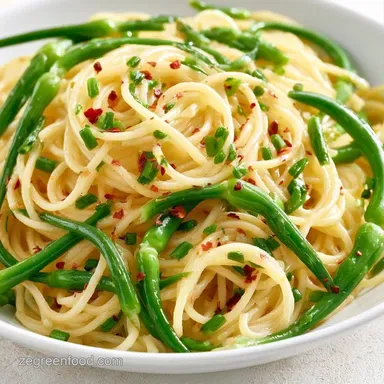
Vegan Lemon Scape Pasta in 20 Minutes

- Time: 5 min active + 15 min cook
- Flavor/Texture Hook: Tangy, bright, and glossy
- Perfect for: A fast spring weeknight dinner
The first time I saw garlic scapes at a farm stand in May, I had no idea what they were. They looked like long, curly green ribbons. I bought a huge bunch because they were cheap, but I spent the first hour at home wondering if they were actually edible or just decorative.
I started by sautéing them in a pan, and the second they hit the oil, the kitchen smelled like the best part of a garlic bulb. It wasn't that aggressive, raw sting, but something softer and more herbal. That's when I knew this was the only way to use them.
This Vegan Lemon Scape Pasta is my go to when the season hits. It's a light, punchy dish that doesn't feel like "health food" but keeps things plant based. You get the comfort of a buttery pasta without the actual butter.
Vegan Lemon Scape Pasta
The trick here is balance. Scapes can be quite potent if you use too many, but when you hit them with lemon zest and nutritional yeast, the flavor rounds out. It turns into a savory, zesty sauce that clings to every strand of spaghetti.
I've found that using a wide skillet is better than a pot for the final toss. It gives you more room to move the pasta around without breaking the noodles. Trust me, the more you toss it in that starchy water, the better the texture becomes.
Avoiding Bland Sauce
Most people just toss the ingredients together and hope for the best. That usually leads to a puddle of oil at the bottom of the bowl and dry pasta on top.
Pasta Water: The starch in the water acts as a bridge between the oil and the lemon juice. According to Serious Eats, this is what creates a stable emulsion that actually sticks to the pasta.
Heat Control: If the pan is too hot when you add the lemon juice, the brightness evaporates. We keep the heat low for the final mix to preserve that fresh, citrusy pop.
| Method | Time | Texture | Best For |
|---|---|---|---|
| Sautéed Scapes | 6 mins | Tender crisp | Bright, fresh flavor |
| Roasted Scapes | 20 mins | Sweet, charred | Deeper, nuttier taste |
Ingredient Breakdown
Choosing the right pasta shape matters. I prefer linguine or spaghetti because the long surface area catches the small bits of sliced scapes.
| Ingredient | What It Does | Best Swap |
|---|---|---|
| Garlic Scapes | Provides a mild, herbal garlic flavor | Fresh asparagus |
| Nutritional Yeast | Adds a nutty, cheesy depth | Miso paste |
| Lemon | Cuts through the fat with acidity | Lime |
Essential Kitchen Tools
You don't need anything fancy here, but a few specific tools make it easier.
- A large pot for the pasta.
- A wide skillet or sauté pan.
- A microplane or fine grater for the lemon zest.
- Tongs for tossing the noodles.
- A liquid measuring cup for the reserved pasta water.
Step-by-step Cooking
- Bring a large pot of salted water to a boil. Add the pasta and cook according to package directions until al dente. Note: Reserve 1 cup of the starchy pasta water before draining.
- Heat 3 tbsp olive oil in a large skillet over medium heat.
- Add 1 cup sliced garlic scapes and 1/2 tsp red pepper flakes. Sauté for 4-6 mins until the scapes are bright green and fragrant.
- Turn the heat to low.
- Add the drained pasta to the skillet.
- Stir in 3 tbsp nutritional yeast, lemon zest, and lemon juice.
- Gradually pour in 1/4 cup reserved pasta water. Toss constantly for 1-2 mins until the sauce becomes velvety and coats the noodles.
- Remove the pan from heat.
- Fold in 1/4 cup chopped parsley.
- Season with 1/2 tsp salt and 1/4 tsp black pepper. Serve immediately.
Better Cooking Tips

Chef's Note: If your scapes are very thick, slice them on a bias. This creates more surface area for the oil to sear, which brings out more sweetness in a shorter time.
Cold Zesting: Zest your lemon before you cut it for juicing. It's nearly impossible to zest a lemon that's already been halved and squeezed.
The Pasta Water Trick: Don't just pour the water in all at once. Add it a tablespoon at a time. You want a glossy coating, not a soup.
To Fix a Dry Sauce
If the pasta looks matte or sticks together, you probably didn't use enough pasta water. Add another splash of that reserved liquid and toss over low heat for 30 seconds.
To Prevent Burning Garlic
Since scapes are milder than raw cloves, they can handle more heat, but they still burn. Keep the skillet at a steady medium; if the oil starts to smoke, pull the pan off the heat for a moment.
For a Creamy Twist
For those who want a richer experience, you can stir in a tablespoon of cashew cream or a dollop of vegan butter at the very end.
| Problem | Root Cause | Solution |
|---|---|---|
| Sauce is too thin | Too much pasta water | Toss for 1 more minute over heat |
| Lacks "cheesy" flavor | Not enough nutritional yeast | Add 1 extra tbsp of yeast |
| Scapes are too tough | Under-sautéed | Cook scapes for another 2 mins |
Fun Variation Ideas
This Vegan Lemon Scape Pasta is a great base for other ingredients. If you have a handful of cherry tomatoes, toss them in with the scapes for a burst of sweetness.
For those who love a punchier garlic flavor, you can stir in a spoonful of vegan garlic scape pesto right before serving. It adds a layer of richness that the lemon alone doesn't provide.
If you're in the mood for something even creamier, this pairs well with a side of cauliflower alfredo sauce drizzled over the top.
Decision Shortcut:
- Want more protein? Add chickpeas or grilled tofu.
- Want more crunch? Top with toasted pine nuts or breadcrumbs.
- Want a gluten-free version? Use brown rice or chickpea pasta.
Scaling the Recipe
Cutting it in half: Use a smaller skillet to prevent the olive oil from spreading too thin and burning. Reduce the cooking time for the scapes by about 1 minute.
Doubling the batch: Don't double the red pepper flakes unless you love high heat; 1.5x is usually enough. Work in batches if your skillet is small, otherwise, the pasta will steam instead of sautéing, and you'll lose the glossy finish.
Storage and Scraps
Storage: Keep leftovers in an airtight container in the fridge for up to 3 days. The pasta will soak up the sauce as it sits.
Reheating: Avoid the microwave if you can. Heat the pasta in a skillet with a splash of water or olive oil over medium heat for 3-5 mins. This brings the emulsion back to life.
Freezing: I don't recommend freezing this dish. The lemon juice and pasta starch don't hold up well, and the noodles often become mushy.
Zero Waste: If you have leftover scape ends that are too woody to eat, don't toss them. Throw them into your freezer bag for veggie broth. They add a wonderful, subtle garlic base to homemade stocks.
What to Serve
Since this Vegan Lemon Scape Pasta is so bright, it needs something earthy to balance it out. A simple side of roasted carrots or a bitter arugula salad with a balsamic glaze works well.
If you want a heartier meal, serve it alongside a crusty piece of sourdough bread to soak up the remaining lemon garlic oil. It's a simple way to make a fast dinner feel like a full Italian feast.
Right then, that's how you handle those curly green scapes. It's a fast, plant based meal that makes the most of a short season. Give it a try next time you see scapes at the market.
High in Sodium
810 mg 810 mg of sodium per serving (35% 35% of daily value)
The American Heart Association recommends a daily sodium limit of no more than 2,300 mg to reduce the risk of high blood pressure and heart disease.
Tips to Reduce Sodium
-
Reduce Boiling Salt-30%
Significantly reduce or omit the 1 tbsp of sea salt used in the pasta water, as much of the sodium is absorbed by the noodles.
-
Swap Salt for Acid-25%
Replace the ½ tsp of fine sea salt with extra lemon juice or a splash of apple cider vinegar to provide a similar flavor punch.
-
Limit Pasta Water-10%
Use less reserved pasta water in the final sauce to minimize the amount of salt carried over from the boiling pot.
-
Amplify Herbs & Spices
Increase the amount of fresh parsley, cracked black pepper, and red pepper flakes to enhance the savory profile without adding sodium.
Recipe FAQs
What's the best way to use garlic scapes?
Sauté them in olive oil. Their mild garlic flavor is best highlighted when cooked quickly until bright green. You can also blend them into a garlic scape pesto for a punchy condiment.
How to cut garlic scapes?
Slice them into 1-inch pieces. Use a sharp knife to cut across the stalk, ensuring uniform sizes for even cooking in the skillet.
Do I need to remove the green parts of garlic scapes before cooking?
No, the green stalks are the edible part. You only need to trim off the very bottom woody end and the flowering tip if it is too tough.
Can you use garlic scapes instead of green onions?
Yes, but they have a stronger garlic flavor. Use them in similar roles, but keep in mind they are firmer and require more sautéing than scallions.
Why is my pasta sauce not glossy or velvety?
Add more reserved pasta water. The starch in the water binds with the olive oil and nutritional yeast to create a stable emulsion.
Can I freeze this pasta for later?
No, freezing is not recommended. The lemon juice and pasta starch break down during the process, often resulting in mushy noodles and a separated sauce.
What should I do with the woody ends of the scapes?
Freeze them for stocks. While too tough for this pasta, the ends still hold flavor and are perfect for simmering in vegetable broth.
Vegan Lemon Scape Pasta in 20 Minutes