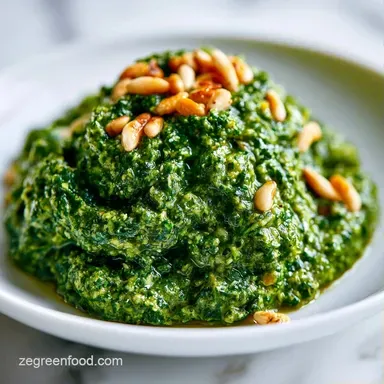
Vibrant Homemade Basil Pesto Recipe

- Time: 5 min active
- Flavor/Texture Hook: Bright, nutty, and creamy
- Perfect for: Quick weeknight dinners or meal prep
The smell of fresh basil hitting a food processor is one of my favorite things in the kitchen. It’s that instant hit of peppery, sweet aroma that makes you feel like you're in a small Italian village, even if you're just in your pajamas on a Tuesday.
For a long time, I relied on store-bought jars, but they always tasted like metallic oil and muted herbs. When I started making this Basil Pesto Recipe at home, I realized the difference is the brightness. Fresh basil has this volatile quality that disappears the moment it's processed or heated too much.
This recipe is all about the contrast. You have the heavy, buttery richness of pine nuts and Parmesan clashing with the sharp, acidic zing of lemon juice. It's a reliable way to bring something vibrant to the table without spending an hour over the stove.
Why This Sauce Works
Quick Pulses: Using short bursts of power prevents the processor blades from heating up. Heat bruises the basil leaves and turns them brown, so pulsing keeps the color bright green.
Slow Oil Integration: Drizzling the oil while the motor runs creates a stable blend. This ensures the oil doesn't separate, leaving you with a creamy consistency rather than a greasy mess.
| Feature | Fresh Homemade | store-bought |
|---|---|---|
| Color | Vibrant Green | Dull Olive/Brown |
| Flavor | Bright & Peppery | Muted & Salty |
| Texture | Slightly Chunky | Uniform Paste |
Shopping List Breakdown
The star here is the basil. I always look for the smaller, tender leaves because they have a more concentrated flavor. Big, thick leaves can sometimes be slightly bitter.
The pine nuts bring a creamy, buttery weight to the sauce. If you can, toast them in a dry pan for about 3 minutes until they smell like popcorn. This small step adds a depth that raw nuts just can't match.
The Parmesan provides the salty, umami backbone. I suggest grating your own block of Reggiano rather than using the pre shredded stuff. Pre shredded cheese is coated in potato starch to prevent clumping, which can make the sauce feel grainy.
Recipe Specs
This Basil Pesto Recipe is designed for speed. Since there is no actual cooking involved (unless you count toasting the nuts), it's a 5 minute process from start to finish.
- Prep time: 5 minutes
- Cook time: 0 minutes
- Total time: 5 minutes
- Yield: 1 cup (about 12 servings)
Essential Kitchen Tools
No specialized equipment is necessary here. A standard food processor is the ideal choice as it's perfect for those important short pulses.
If you don't own one, a high-powered blender can do the job, though you should be cautious. Blenders can easily over-process ingredients into a liquid, so be sure to stop frequently to scrape the sides.
Alternatively, for a more traditional method, a mortar and pestle works well, though it will certainly give your arms a workout.
Detailed Preparation Steps

Stick to this Basil Pesto Recipe precisely to ensure the right texture.
- Toast the pine nuts. Heat a small pan over medium heat for 3 minutes until they reach a golden brown color.
- Process nuts and garlic. Combine the toasted pine nuts and peeled garlic cloves in the food processor.
- Pulse until coarse. Hit the pulse button a few times until the mixture resembles coarse sand. Note: Avoid over-processing, or the garlic will become a bitter paste.
- Add the greens. Toss in the fresh basil leaves.
- Add seasonings. Mix in the lemon juice, salt, and pepper.
- Chop the basil. Pulse in short intervals until the basil is finely chopped but not yet a smooth paste.
- Emulsify the oil. With the motor on low, gradually stream in the olive oil until the sauce is smooth and velvety.
- Incorporate cheese. Mix in the grated Parmesan cheese and pulse 2-3 times until just combined.
Troubleshooting the Texture
Pesto can be temperamental. The most common issue is the color shifting. If you process the basil for too long, the friction from the blades creates heat, which oxidizes the leaves. Keep your bursts short.
Another common problem is the oil separation. This happens if the oil is dumped in all at once. You want to incorporate it slowly so the fats and the solids bind together properly.
Fixing Thin Pesto
If the sauce feels too runny, it's usually because the basil was too wet after washing or you went heavy on the oil. Stir in an extra tablespoon of Parmesan or a few more toasted pine nuts to tighten it up.
Taming Sharp Garlic
If the garlic flavor is overwhelming, a pinch of sugar or a tiny bit more lemon juice can balance the bite. Next time, try removing the tiny green germ from the center of the garlic clove.
Correcting Dull Color
Once it turns brown, you can't really reverse it, but you can mask it. Stirring in a handful of fresh, uncooked spinach during the pulse phase can bring back that bright green hue.
| Problem | Root Cause | Solution |
|---|---|---|
| Brown Color | Over processing/Heat | Use short pulses |
| Oily Texture | Oil added too fast | Drizzle oil slowly |
| Grainy Feel | Pre shredded cheese | Use freshly grated block |
| Too Bitter | Burnt nuts or raw garlic | Toast nuts lightly; remove garlic germ |
Preservation and Waste
This Basil Pesto Recipe stays fresh in the refrigerator for roughly 5 days. To maintain the bright green color, top the pesto with a small amount of olive oil before sealing the container. This creates an air barrier that prevents oxidation.
For the freezer, start with ice cube trays. Once the pesto is solid, transfer the portions to a freezer bag. They remain good for about 3 months and are convenient for adding directly to a hot pan of pasta.
Don't discard your basil stems. I usually store them in a freezer bag along with leftover vegetable trimmings. When the bag is full, I simmer the contents in water to create a light vegetable broth for soups.
Perfect Serving Suggestions
Pasta is the most natural pairing. Mix the sauce with steaming noodles and a bit of the starchy cooking water for a silky finish. If you're planning a complete meal, check out my Pasta in 20 Minutes recipe for tips on adjusting portions for more guests.
However, the uses go beyond just noodles. I enjoy it spread over toasted sourdough topped with a piece of fresh mozzarella. You can also use it to flavor chicken before grilling or serve it as a dip for crisp bell peppers and carrots.
For a healthier alternative, fold a spoonful into warm farro or quinoa along with roasted cherry tomatoes. The nutty depth of the sauce complements the earthiness of the grains perfectly.
Creative Flavor Twists
You can easily tweak this Basil Pesto Recipe to fit your diet or what's in your pantry.
For a nut free or budget version, use walnuts. They have a stronger, slightly more bitter taste than pine nuts, but they provide a similar richness. You can also try a basil scape pesto if you have a garden and want something more pungent.
For a plant based diet, just swap the Parmesan for 2 tablespoons of nutritional yeast and a pinch of extra salt. This gives you that cheesy, nutty flavor without the dairy.
If you can't find pine nuts, cashews are a great substitute. They make the sauce creamier and slightly sweeter.
| Original Ingredient | Substitute | Why It Works |
|---|---|---|
| Pine Nuts (1/3 cup) | Walnuts (1/3 cup) | Similar fat content. Note: Stronger, earthier flavor |
| Pine Nuts (1/3 cup) | Cashews (1/3 cup) | Very creamy. Note: Slightly sweeter profile |
| Parmesan (1/3 cup) | Nutritional Yeast (3 tbsp) | Savory, salty. Note: Makes it a Vegan Basil Pesto Recipe |
| Lemon Juice (1 tbsp) | White Wine Vinegar (1 tbsp) | Provides necessary acidity. Note: Sharper, less fruity |
Quick Decision for Customizing:
- For a bolder garlic hit: double the garlic to 4 cloves.
- For a lighter sauce: reduce oil to 1/3 cup and add 1 tbsp water.
- For a thicker dip: omit the lemon juice and add extra Parmesan.
Trust me, once you make this Basil Pesto Recipe at home, you'll never go back to the jarred stuff. It's just too bright and fresh to ignore. Right then, go grab some basil and get pulsing!
Recipe FAQs
What is the secret to a good pesto?
Slowly stream in the olive oil while the motor is running. This ensures a silky-smooth emulsion rather than a broken sauce. If you enjoyed mastering this technique, you can apply it to our vegan pesto pasta as well.
Which herb is used in a traditional pesto recipe?
Fresh basil leaves are the primary herb. They provide the characteristic peppery, sweet aroma and bright green color.
How do you make a great pesto from scratch?
Pulse toasted pine nuts and garlic first until they look like coarse sand. Then add basil, lemon juice, salt, and pepper, followed by a slow drizzle of oil and a final pulse with Parmesan.
What are common pesto making mistakes?
Over-processing the basil is the biggest error. The heat from the blades oxidizes the leaves, turning the sauce brown instead of bright green.
Can I use different nuts instead of pine nuts?
Yes, walnuts or almonds are great alternatives. They offer a similar richness, though pine nuts provide the most traditional, buttery flavor.
Is it true that you should blend all ingredients together at once?
No, this is a common misconception. Adding ingredients in stages, nuts first, then greens, then oil, prevents the basil from overcooking and ensures a smooth texture.
Would omitting cheese ruin the flavor?
No, you can simply add a pinch more salt. This maintains the savory profile without using dairy.
Basil Pesto Recipe in 5 Minutes